How Price Differences Between Exchanges Get Exploited
Crypto arbitrage paints an almost perfect picture: buy a coin where it is cheaper, sell it at once where it is dearer, pocket the difference. On paper it is easy, risk-free profit. In real life that road has long been closed for the ordinary trader. The split-second the gap holds is swallowed by the bots of large firms, and what is left of a beginner's share is eaten by fees and transfer time.
People ask me about arbitrage constantly, almost always with a note of hope: here it is, earnings without risk. For retail it is a mirage, and not because the idea is weak. It is just that on this field you are up against players whose speed and resources are on a different scale entirely. Let me walk through it without rushing: what crypto arbitrage is, what forms it comes in, and why it is out of reach for an ordinary person.
In this article we'll cover:
- crypto arbitrage is profit from the price gap of one coin across venues;
- there are two working forms: inter-exchange between exchanges and triangular within one;
- on paper the scheme is risk-free, but the gap is grabbed in a flash by the bots of large firms;
- retail can't get it: speed, fees, and transfer time do it in.
Start with where this gap even comes from.
What is crypto arbitrage?
Crypto arbitrage is extracting profit from the gap in the price of one and the same coin on different venues in the very same second. The idea is plain: buy where the price is lower and instantly sell where it is higher, keeping the gap for yourself.
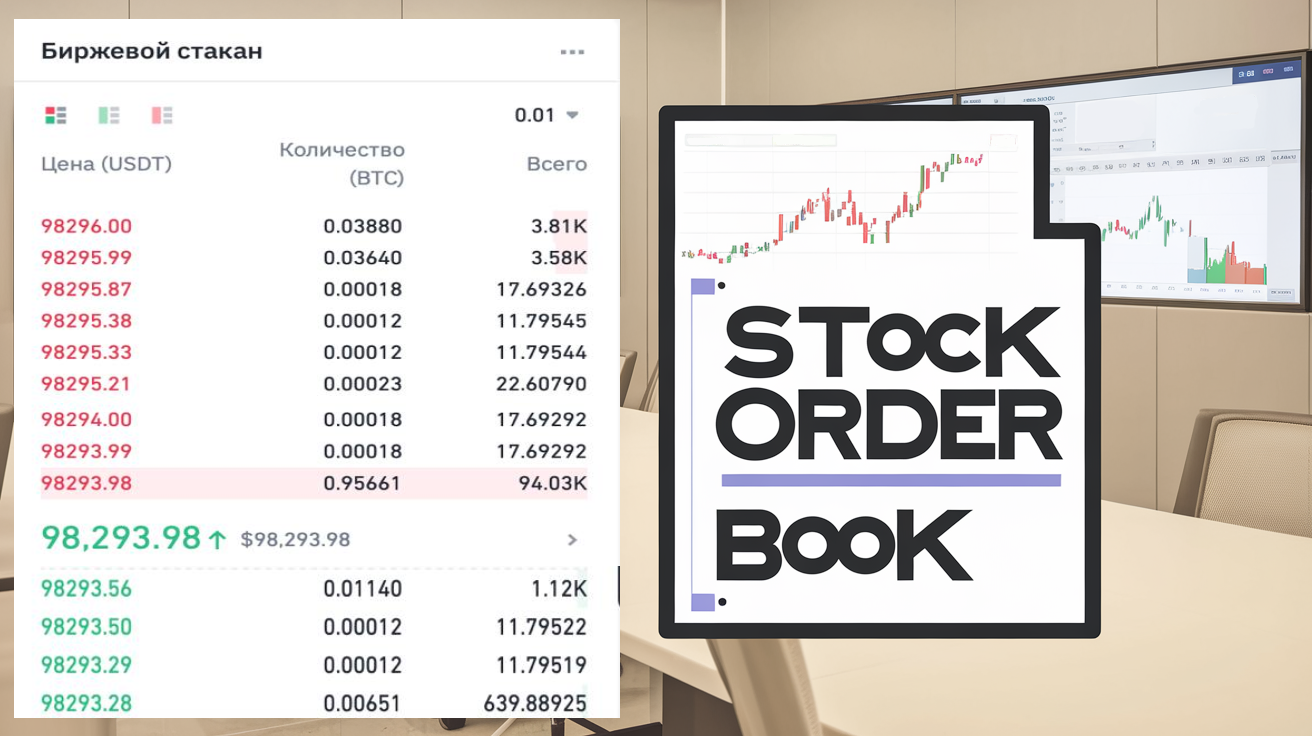
Why prices diverge at all. Exchanges don't tick in sync: each has its own demand, its own order-book depth, its own liquidity, so quotes drift apart a little. The paradox is that arbitrage itself closes that gap: the moment someone buys up the cheap side, prices level out. That is why the gap exists for only a fraction of a second. What crypto trading is in general I lay out separately. And a warning up front: seeing easy money in arbitrage is a classic beginner's mistake.
In short: Arbitrage is the price gap of a coin between exchanges. It comes from venues being out of sync and closes itself in a fraction of a second, so you can't catch it by hand.
Types of crypto arbitrage: inter-exchange and triangular
There are several forms, but a beginner only needs a couple. Inter-exchange is the ABC of the genre. You take a coin on the venue where it is cheaper and offload it on the one where it is dearer. The catch is the transfer: the coin has to be physically moved between exchanges, and a move is minutes and a network fee. In that time the gap evaporates, and more often than not the price turns against you.
The triangular form spins inside the walls of a single exchange and skips the transfer. Here you earn on the desync of a triple of pairs: you run the first coin into the second, the second into the third, the third back into the first, and if the rates have drifted a touch, the loop leaves a margin. It looks elegant, only behind these tiny gaps the bots sit in ambush. The gap in rates between pairs I break down in detail in the note on the spread, since arbitrage by nature is trading on the spreads between venues.
In short: Two forms: inter-exchange gets stuck on time and the fee for moving the coin, triangular skips the move but feeds on micro-gaps that the bots take first.
Other types of crypto arbitrage: statistical, funding-rate and DEX
The two basic forms are not the whole list. In the "types of arbitrage" rundowns you will also meet statistical arbitrage, where an algorithm trades a basket of coins on the assumption that prices revert to their average, holding long and short positions at once. It is a hedge-fund tool built on models and data feeds, not something you run by eye. Then there is funding-rate arbitrage on perpetual futures: you hold the coin and short the same amount in a perpetual contract, stay market-neutral, and collect the funding payment. The position is delta-neutral, but the yield is thin and it lives or dies on fees, leverage and the funding flipping against you.
A fourth form is DEX arbitrage, the price gap between decentralized exchanges like Uniswap and the rest of the market. Here the rival is not just a fast firm but bots that reorder transactions inside the block itself, and the network gas fee swallows small gaps before you even see them. Notice the pattern: every one of these forms leans even harder on capital, code and infrastructure than the basic two. None of them turns arbitrage into the easy, hands-off income the ads promise, and for a retail beginner they sit further out of reach, not closer.
In short: Beyond inter-exchange and triangular there are statistical, funding-rate and DEX arbitrage, but each leans even harder on algorithms, capital and infrastructure, so none of them is the easy retail income it is sold as.
P2P arbitrage: the local premium and why it is the most scam-laden form
There is one form an ordinary person can technically reach, and precisely because of that it deserves the most caution. P2P arbitrage trades not against the bots but between people: in a country with currency controls or high inflation, the same coin often sells three to five percent above the global price, because locals are paying a premium for access to dollars in crypto form. On paper you buy on a normal exchange and sell into that local premium peer-to-peer, pocketing the gap. Here there are no millisecond servers to outrun, which is exactly why beginners are funnelled towards it as the one accessible kind of arbitrage.
The catch is that the speed problem is simply swapped for worse ones. The other side of a peer-to-peer deal is a stranger who can dispute a payment, reverse it, or vanish after you have released the coin, so counterparty risk replaces execution risk. Banks and exchanges flag this kind of flow, and an account that suddenly moves money in and out gets frozen for an AML or KYC check, locking your capital while the premium evaporates. And the worst version is not arbitrage at all: an offer to run P2P arbitrage for you with a guaranteed daily percentage is the classic shape of a Ponzi, paying early entrants with the deposits of later ones until it folds. So the one form retail can reach is also the one most heavily dressed up as a scam, and a promise of steady, risk-free percentages here is a red flag, not an opportunity.
In short: P2P arbitrage sells crypto into a local premium of a few percent in countries with currency controls, and because it is not a speed race it is the one form retail can reach; but it swaps the bots for counterparty risk, account freezes and AML checks, and any guaranteed-percentage P2P offer is usually a Ponzi.
Why crypto arbitrage doesn't work for retail traders: speed and fees
The core of it is simple: arbitrage is not about reading the market, it is about speed and hardware. Those fractions of a second are worked by the high-frequency algorithms of large firms, whose servers sit right next to the exchange just so the signal runs a shorter path. A person with a smartphone has nothing to catch against such a machine: by the time you have spotted the gap and reached for the button, it is already taken.
Plain arithmetic finishes the idea off. A fee per trade on each of the two exchanges, the network fee for the move, possible tax and the spread, and all of it is subtracted from the microscopic difference the whole thing was started for. More often the bottom line is a minus. Add limits and delays on withdrawal, freezes and plain technical failures, and the fairy tale about easy money crumbles.
I don't wander into that wilderness myself, because my strength is in breaking down the market, not in a server's milliseconds. And I have seen plenty of how people launch bots on the inter-exchange scheme and then tally their losses on fees and stuck transfers. Most important of all: the risk-free label used to lure people into arbitrage simply does not exist in trading. If you're offered turnkey arbitrage with a promise of a steady percentage, treat it as a red flag and the hallmark of fraudsters. A serious inter-exchange scheme is the domain of large firms with infrastructure, not a button for a private individual. Effort is wiser spent on a clear method of working with the chart, where an ordinary person really does have a chance.
There is a deeper reason arbitrage fails in practice, execution risk. The spread between exchanges exists on paper, but to capture it you must fill two legs of the trade at once, and they live in different places. While you buy cheaper on one venue, the price on the other has already moved, and the real fill comes with slippage that eats the difference. Add the time to move coins between exchanges: the network may confirm a transaction for minutes, and in those minutes the spread closes or turns against you. Then add fees on entry, exit and withdrawal. In the end what looked like profit in a table more often comes out as zero or a loss in real execution, and that is exactly why almost only bots with direct exchange access live on arbitrage steadily.
In short: Arbitrage is a contest of servers, not analysis, and a private trader is behind from the start. Speed, fees and transfers eat the gap, and a promise of profit without risk is most often the hallmark of fraudsters.
Frequently Asked Questions
It is profit from the price gap of one coin across venues: take it where it is cheaper and give it where it is dearer. The gap is born from exchanges being out of sync and lasts a fraction of a second, then quotes converge again.
Mainly two. Inter-exchange: the coin is taken on one exchange and given on another. Triangular: within a single exchange you play on the desync of a triple of pairs. Inter-exchange always drags on time and the fee for moving between venues.
In my view, no. The gap is taken in a fraction of a second by the high-frequency algorithms of large firms, and the rest is eaten from a private trader by fees, taxes, and the coin transfer. Over the distance the result is more often negative.
The risk-free label here is deceptive. There is no getting rid of fees, stuck transfers, and failures, and under the mask of arbitrage beginners are often handed a scam with a promise of guaranteed income. A reason to be wary.
It is selling crypto into a local premium: in countries with currency controls or high inflation the same coin often trades a few percent above the global price, and you buy on a normal exchange and sell peer-to-peer into that premium. It needs no millisecond speed, which is why beginners are pushed towards it, but it swaps the bots for counterparty risk, account freezes and AML checks, and any guaranteed-percentage P2P offer is usually a Ponzi.
Beyond inter-exchange and triangular, the common ones are statistical arbitrage (an algorithm betting on prices reverting to their average), funding-rate arbitrage (a delta-neutral position on perpetual futures that collects the funding payment), and DEX arbitrage (price gaps between decentralized exchanges). Each leans even harder on capital, code and speed.
About the Author
Author: Igor Arapov — independent researcher in the psychology of investment decisions and behavioral finance, practising trader since 2013, founder of arapov.trade, author of a trading book series (ORCID: 0009-0003-0430-778X).