Buy cheaper and sell dearer, that is the whole of trading in essence, and you can earn both on a rising market and on a falling one. Only a beginner's first step does not lie in the trade. First learning, then a long practice on demo, and only then a live account, and even that with a tiny risk per trade. Deposits burn for two reasons that repeat again and again: too much risk and blind entries with no rules.
I walked this road myself for a long time and with a heap of bumps, so I will not promise an easy start. The market is a profession with its own entry barrier, like medicine or engineering, not a machine that dispenses fast money. Whoever has accepted that has a chance; whoever came for the enrichment button has almost none. Further, in order, we will gather everything you need at the entrance: what trading is, the difference between a long and a short, how learning through a demo works, on which mistakes accounts burn, and how many years the road to even trading really takes.
In this article we'll cover:
- here you earn on price swings, and it is a craft, not a guessing game;
- a long is opened for a rise, a short for a fall, but a short hides an asymmetric risk;
- the path goes learning, demo, a regulated broker, a small real account, in exactly that order;
- about three trades out of ten will be red even with a working system, and that is part of the norm.
We start with the basics: what trading is and what profit in it even comes from.
What Is Trading in Simple Terms?
Trading is working with financial assets: they are bought and sold to earn on price movement. Shares, currency, crypto, futures, and other instruments go into play, and the principle is the same everywhere.
The main difference from investing is hidden in the timeframe. An investor banks on years and a slow rise in value, while a trader catches the swings themselves on stretches from a couple of minutes to a couple of weeks. There is no reason for a beginner to grab at all markets at once: it is smarter to take one instrument, get into it properly, and not spread thin. Price on any venue is drawn by the clash of supply and demand, the argument of a buyer with a seller. So the trader's job is not to predict tomorrow but to recognize whose edge is stronger right now, and to step into that move, having cut the risk in advance.
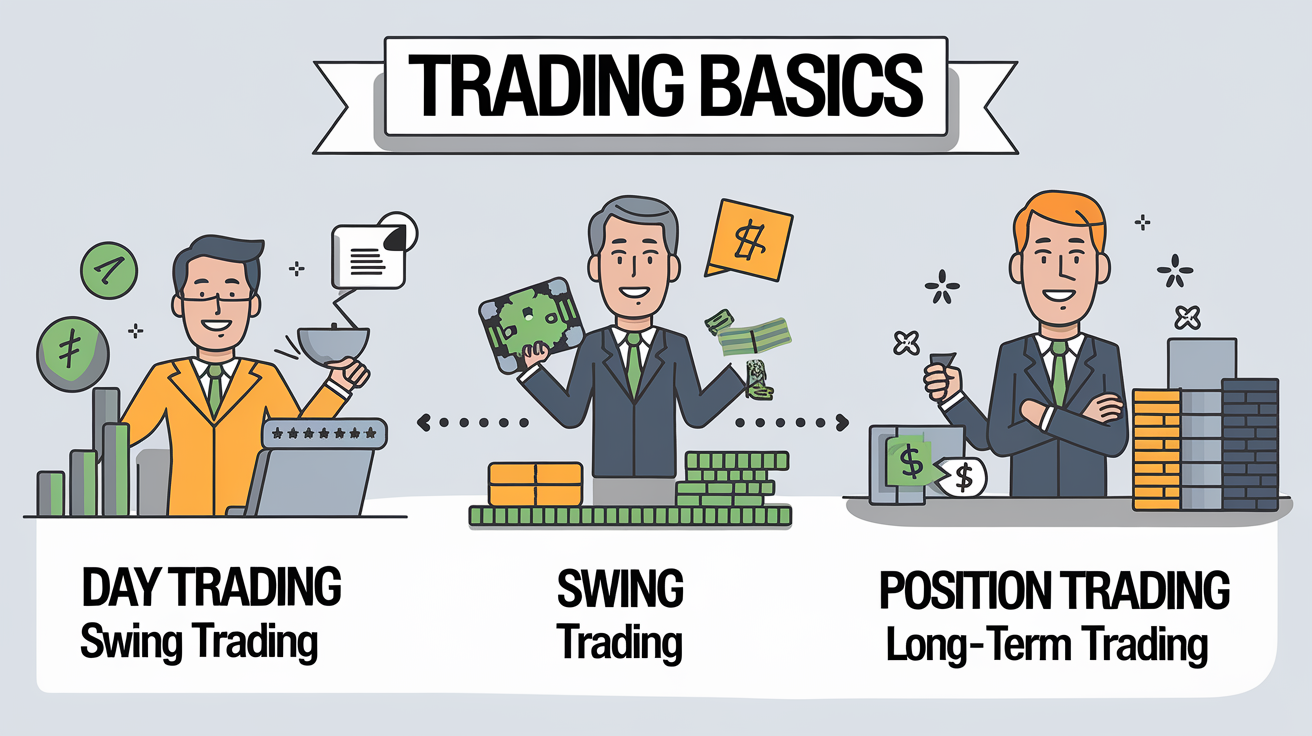
In short: Trading is profit on the movement of asset prices over a short stretch, unlike years-long investing; a beginner does better to master one instrument and read the edge of forces rather than guess about the future.
Should You Even Get Into Trading, and Who It Is Not For
Before learning how, honestly answer yourself the question of whether you should. Trading is a lifelong profession, like medicine or law, not a weekend side hustle and not a way to quickly fix things. It suits not everyone, and there is nothing insulting in that.
Who will have a hard time. Whoever came for fast money and is not ready to learn for years, the market will bill first. Whoever cannot bear uncertainty and wants guarantees, too: there are no guarantees here in principle, only probabilities over the distance. And whoever cannot admit a mistake and close a loss by plan, since the inability to accept a small minus turns it into a big one.
Who should try. Whoever is ready to treat this as a craft with an entry barrier: to learn, keep a journal, dissect their own misses, and accept that the result is seen only over a series of trades, not in a single one. If, having read this, you did not change your mind but on the contrary got set, that is a good sign. The advice sounds banal, but I will repeat it: trading is not the place to work out who you are, you pay money for that kind of self-discovery here, and it is better to decide in advance.
In short: Trading is a lifelong profession, not fast money; it does not suit those who wait for guarantees, cannot stand uncertainty, and cannot close a loss by plan, and it suits those ready to learn for years and measure themselves by a series, not a single trade.
Long and Short: How You Make Money on a Rise and a Fall
You can earn in trading in both directions, and that is the first thing worth lodging in your head. Long is a long position, an ordinary purchase betting on a rise: bought cheaper, sold dearer, the difference is yours. Short is a short position, earning on a fall, and it is built a touch trickier.
The mechanics of a short are like this: you borrow the asset from the exchange, sell it right away at the current price, wait for a decline, and buy it back cheaper, returning what you borrowed and keeping the difference. In essence you sell what you do not have, and that is exactly what confuses a beginner. It sounds like a way to earn always, and therein lies the trap.
The danger of a short is in the asymmetry of risk. When you are in a long, your loss is capped from below: price will not fall below zero, you will not lose more than you put in. But in a short, price goes against you upward, and it can theoretically rise without limit, so the potential loss from above is capped by nothing. Add that a short usually uses borrowed funds, and one strong move up takes out an inexperienced short-seller especially harshly. So I advise a beginner to start with longs and master the short later, already with a disciplined stop.
In short: A long is earning on a rise, a short on a fall through selling a borrowed asset; a short is more dangerous because the loss upward is capped by nothing, so a beginner does better to start with longs.
Which Method to Choose as a Beginner: Why I Watch Volume, Not Indicators
A method is what you look at when you decide to buy or sell. It is easiest for a beginner to start with one honest question: who is stronger on the market right now, the buyer or the seller. I answer it by volume and levels, not by indicators, and behind that stands a concrete reason from my own road.
The first two or three years I spent on exactly what everyone advises: books, indicators, technical analysis. It gave no result, and everything shifted only when I moved to volume analysis by the Wyckoff method. The logic is simple. An indicator is a formula from past price: it shows what has already happened, and always with a delay. Volume shows something else, who really traded and with what force right now, because you cannot hide a big player on the exchange, its footprint is visible in the number of trades. So I consider it reasonable for a beginner not to hang a dozen indicators on the chart but to learn to read two things: levels, where price has already turned, and volume, which shows whether big capital is going there or not.
This does not mean indicators are banned, it means they are secondary. First you understand by the levels where on the chart it is cheap and where dear, then you look at whether volume confirms someone's edge, and only then, if you feel like it, you add an auxiliary tool. The reversed order, when a beginner hunts for a magic grail indicator with the answer to what will happen tomorrow, is the main trap of the start: tomorrow's price cannot be predicted, but the edge of forces here and now can be recognized.
In short: A beginner's method is decided not by a set of indicators but by the ability to read levels and volume, who is stronger right now; an indicator always looks into the past with a delay, while volume shows the actions of big capital in the moment.
What to Trade as a Beginner: One Instrument Instead of Ten
The most frequent mistake at the start on the choice side is spreading thin: a beginner watches shares, crypto, currency, and a dozen coins at once and does not manage to understand a single market. I think you should start exactly the opposite way, with one instrument, and stick to it until you learn to read it.
Which one exactly is a secondary question, the principle matters more. The instrument should be liquid, that is with a large number of participants and trades, because on a liquid market volume is more honest and levels work clearer. Thin, little-known assets, especially small coins, are no good for learning: there price is easily moved by one big player, and you are learning not the market but its manipulations. I myself work on forex, futures, and gold, but any one liquid instrument will suit a beginner, as long as you stop jumping between a dozen windows.
Why exactly one. Each market lives in its own way: it has its own rhythm, its own active hours, its own reaction to volume. When you watch one instrument for months, you begin to feel its character, and your levels become more precise. Spreading over ten, you stay shallow in each. It is the same logic as with the method: better one thing deeply than everything on the surface.
In short: A beginner does better to take one liquid instrument and read only it for months rather than spread over a dozen markets; on thin assets like small coins you learn not the market but the manipulations.
How to Start Trading: A Step-by-Step Path
I divide a beginner's road into steps, and what matters here is not the pace but the order. The start is theory: to grasp how the market works and by what method you will trade. Next is demo, where trades go without risk to your wallet, until the account comes out to a steady plus. Third is the venue and broker, and I choose them not by advertised bonuses but by regulation, because a broker under the law is about the safety of your funds. Fourth is a careful move to a real account, necessarily with a stop and a modest risk per trade.
Let's go through the steps in more detail, because all the practice is in them.
Theory and method. You should start not with the terminal's buttons but with an understanding of how price even moves: what a support and resistance level is, why in some zones price turns and others it passes straight through, how volume fits into this. This is the foundation on which everything else then stands. In parallel you choose a method, that is the language in which you will read the market, and why I advise starting with levels and volume I explained above.
A regulated broker. For the venue, the first and only thing I check is regulation. A regulated broker works under the supervision of a financial regulator and is obliged to hold your money by the rules, not at its own discretion. Advertised bonuses, a pretty interface, and promises of returns are secondary here and even suspicious: the louder the profit guarantees, the more carefully you should look. A separate danger is a bucket shop, an outfit that only imitates a broker but in fact keeps your trades inside itself and earns on your losses. The defence is simple, trade only where the broker is licensed and routes trades to a real exchange.
A small real account. The first live trade should be boring: a small account, a small risk, a compulsory stop-loss set in advance. Do not look for the perfect entry point, look for discipline: enter by your rule, set the stop before the entry, not after, and accept in advance that this trade may turn out losing, and that is normal.
A steady plus for me is not one pretty trade but the calm result of a series: you played out several dozen entries on demo and came out in profit in total, that is when a system works, not luck. And the fifth step, underestimated most of all, is do not rush: in this profession the one who does not hurry stays. Where exactly to trade and how to pick a broker and instruments I go through in the piece on platforms, instruments, and a broker, and where to start the learning itself I show in the course section on where to begin.
In short: The order of the start: theory and method, demo to a steady plus over a series, a regulated broker, and only then a small real account with a stop; the fifth step, underestimated, is do not rush.
How Much Money You Need to Start and What Return Is Realistic
The question of what sum to come in with a beginner asks first, though at the start it is not the main one. The size of the account will not save you from losses if you do not understand the market: here you can put down even a hundred million, and without understanding it will go into the market just the same, only longer. So the right first question is not how much money but am I ready for systematic trading.
On the sum my guideline is this: you should start with a small account that you are not afraid to lose, and treat it as learning money, not a bet on wealth. The account is your small business, and as in any business, it rarely works out the first time. A small sum at the start protects both the account and the psyche: a beginner's mistakes are inevitable, and it is better to pay for them a little.
If we put it in figures, the formal minimum is set by the broker, and often it is just ten or a hundred dollars: you can trade in microlots, in a very small size. But a sensible starting sum for a beginner is a few hundred dollars you would not mind losing without harm to your life. And still, far more important than the figure itself is what percent of it you risk: I keep the risk within one or two percent of the account per trade, and with that approach even a run of losses does not wipe the account. Big leverage at the start I would not touch, it speeds up not only the profit but the loss, so capital management here weighs more than the starting sum.
Now about returns, because it is exactly here that inflated expectations kill more accounts than bad trades. The realistic return of an experienced trader is on average two to five percent a month on capital, and five is already a very good result. For a beginner an excellent start is one percent a month. The hundred percent a month that advertising is dotted with is not a systematic return but a myth born of crypto volatility: if someone steadily made that much, in a year they would buy up half the world. Hence a practical takeaway: do not count profit by a single trade. To understand whether an approach works you need a series, roughly fifty to a hundred systematic, conscious trades, and only the average result over this series tells the truth. One pretty trade is luck, an even plus over a hundred is a system.
In short: At the start it is not the sum that matters but readiness for systematic trading; technically a start from a hundred dollars, but sensibly a few hundred as learning money, and keep the risk at one or two percent per trade. Count on one percent a month as a beginner and two to five as an experienced trader, not the advertised hundred, and judge the result by a series of fifty to a hundred trades, not by one.
How a Single Trade Works: Entry, Stop, and Exit
Since it has come to a real account, let us break down what a single trade is even made of, because a beginner usually thinks only about the entry, while the rest decides. Any trade has three parts: entry, stop-loss, and target.
The entry is the level at which you decide to step into the market. I look for it where price has already turned before and where volume shows the arrival of big capital, not where you just felt like it. The stop-loss is a predefined level at which the trade closes with a loss if the market went against you. It is set not at random but behind the nearest significant extreme, where your idea no longer works, and set before the entry, not after. A stop is not a defeat but the boundary of your risk: without it one move of the market can wipe out the whole account.
The risk per trade is kept small, in the region of one to two percent of the account, and the position size is counted from it, not the other way round. And the last thing, the risk-to-reward ratio: the target should stand further than the stop, a sensible guideline from one to two and up. The logic is simple, at such a ratio you can be wrong more often than right and still stay in profit over the distance, because the wins are larger than the losses. This is not advice to you personally, it is how I count a trade.
In short: A trade has three parts: entry by level and volume, a stop behind a significant extreme and set before the entry, and a target further than the stop; keep risk at one to two percent, and at a ratio from one to two you can be wrong more often than right and still be in profit over the distance.
Demo Account: What It Really Teaches and What It Does Not
A demo is a tool everyone praises, but few honestly speak of its limits. A demo account is a training account with virtual money and real market quotes, on which you trade as on a real one but risk nothing. For practising the mechanics it is irreplaceable.
On a demo you calmly learn the main thing: to place orders, see levels, work out your system, and make all the typical mistakes without paying for them with real money. That is a huge saving of both nerves and the account. But I will honestly mark the ceiling of a demo too: it does not train the psyche of real money. When a virtual thousand is at stake, it is easy to be calm and disciplined; when the same moves happen with your real money, fear and greed switch on, which simply were not there on the demo. So you should move to live not when it got boring but when the system gives a steady plus over a series of trades, and move with a small sum, to top up the psyche gradually. Why a demo is needed at the start I also go through in the course section on the demo account.
And one more order worth locking in at once: the first step is not funding a real account, it is practice. First the demo and a system proven over a series, and only then real money, and with a small amount at that. Flip the order, fund a real account before a system exists, and you will be paying for your education with your own money and nerves.
In short: A demo account teaches the mechanics and the system well without risk to money, but does not train the psyche of real losses; you should move to live after a steady plus over a series and with a small sum.
The Main Beginner Mistakes That Lose the Account
Year after year the picture of losses is the same: the market is almost not to blame, the source sits in the person themselves. At first a beginner is fearless, revs up the risk and adds to a losing position, and after the first rout fears every shadow. If you write out what comes up more than anything, you get a short list of what kills the account.
In first place is bloated risk: into one trade they put a huge part of the account instead of a modest percent. Next is averaging down a loss. Averaging down a loss is adding to a losing position instead of exiting by the stop, a bet on a comeback from which the pit only gets deeper. Further trail trading on a hunch with no rules, trades without a stop with a bottomless loss, attempts to catch a reversal against the trend, the wish to take revenge on the market after a loss, and the hunt for a grail indicator instead of understanding that price is pushed by big capital.
And here is what a beginner does not factor in and panics over. Losing trades exist even in a working system: a rough guide of seven to three, that is about thirty entries out of a hundred turn out losing, and that is the norm. The trouble is in the spread: these minuses can line up in a row, five, eight, ten in a row. On big risk such a row burns the account, though over the long distance you would have stayed in profit. Hence my non-obvious advice: prepare in advance for losses, not for profits. What ruins the account is not the red trades themselves but the panic and the thirst to win it back, turning an ordinary streak of minuses into an unrestrained blowup.
It is worth adding about the math, without it the advice on risk sounds abstract. By default the market has a negative expected value for a trader with no system: spread, commissions, and your own emotions slowly eat the account, and with random trading the account shrinks almost guaranteed. A system flips this expectation into a plus, but the plus shows only over a series of trades, not in each one. Hence the link: you divide the account over a series, keep a small risk in each trade, and then even a streak of losses in a row does not carry off the account, while the math has time to work in your favour. Break any link, jack up the risk or drop the stop, and the negative expectation takes over.
Out of the same math grows the habit that separates the survivors: judging yourself by the process, not by the result of a single trade. There is a good loss and a bad win. A good loss is when you entered by the system, set the stop and still took a minus: the rules were kept, and the minus is simply a business expense. A bad win is when you broke the plan, jumped in without a setup or overheld with no stop, and the trade accidentally went green: you made the money but reinforced a harmful habit that will later take far more. So in the journal I mark not only plus or minus but whether the rules were followed, and it is this second column that decides whether you survive over the distance.
In short: The account is killed by bloated risk, averaging down, the absence of a system and a stop, trading against the trend and on emotion; a third of entries are red always, and on big risk their streak finishes off the account, so prepare for losses, not for profits.
Teaching Yourself Trading: A Roadmap and a Trade Journal
Mastering trading on your own is realistic, I am living proof of it, and quality free material now is several times more than what once fell to me. A beginner's trouble is not a shortage of knowledge but its disorderly pile-up: they re-watch dozens of authors, grab a piece from everywhere, and cook a porridge of mutually exclusive approaches in their head. So it is not about the number of clips but about a framework and self-discipline.
I assemble the learning framework like this. The foundation: how the exchange works, what orders there are, where supply and demand come from. Then technical analysis: levels and chart reading. Then volumes and the behaviour of big capital, how smart money builds a position. After that psychology with discipline, without which the system falls apart on the very first emotions. And through all of this practice on demo with a trade journal, where the entry, its reason, and the outcome are entered. The journal is the very thing that stitches the scattered lessons into a system and pulls out your real misses, otherwise you will spin them in a circle for months without noticing the pattern.
If you translate this framework into a concrete sequence, I would go like this. First levels and price ranges: where price is historically cheap and where dear. Then volume, that is how big capital enters the market and leaves a footprint. Next liquidity, the zones where orders and stops pile up, because it is exactly to them that price is often pulled. Then false breakouts and false breaks, the mechanism by which a big player builds a position against the crowd. And on top of everything Smart Money patterns, how to read the actions of big capital and step into its side. Psychology and discipline go through all the stages, and the trade journal stitches them into a single system.
And here is my non-obvious thesis, not as an instruction to you personally: going it alone is not a weakness of the learning but its strongest side. Whoever a mentor chewed down to the smallest detail often gets lost one on one with the market, while whoever got there under their own steam understands the reason for each of their actions. So I am for the self-taught path, but on one condition: by a clear map and with a journal, not by the scheme of let me watch one more clip and it will dawn on me. How to pull rules, tests, and a journal into a single system is covered in the piece on the trading system, plan, and journal.
In short: Learning on your own is realistic, but it is decided by the framework, not the number of clips: foundation, technical analysis, volumes and big capital, psychology, and on top of everything practice on demo with a journal; going it alone here is a strength, not a weakness.
What Sets a Successful Trader Apart and How Long the Path Takes
A secret or a miracle strategy is expected from the answer. There is neither. The market pays not the one who guessed but the one who time after time performs the right actions over the distance. I am ready to boil success down to three prohibitions you must not break: do not go against the trend, do not bloat the risk in a single trade, and do not leave a trade without a stop. Break even one, and a blown account is only a matter of time.
The catch is that learning these rules is simple, while following them is hard: your own psyche gets in the way, since after a plus you are tempted to raise the risk, after a minus to win it back. So I put discipline above sharpness of mind: a clever but unfocused trader the market punishes faster than a simple but methodical one. How to hold risk and count it for each entry is covered in the piece on risk management and capital.
And about the timeline straight, without advertising fervour. To even trading go not weeks and not a month but years of practice. The method as such is mastered in a couple or three months, while the stamina to calmly hold the rules, not jack up the risk, and not take revenge on the market I built up over years, and it is exactly that, not a secret scheme, that made trading profitable. Hence my main non-obvious thesis: success in trading is closer to boredom than to thrill. Profitable trading is monotonous, it is the same vetted steps day after day, while a beginner chases emotions and brilliant entries. In profit ends up the one who has come to terms with this monotonous discipline and holds the rules when others drop them. What I would tell myself at the start is gathered in the video with rules for a beginner trader.
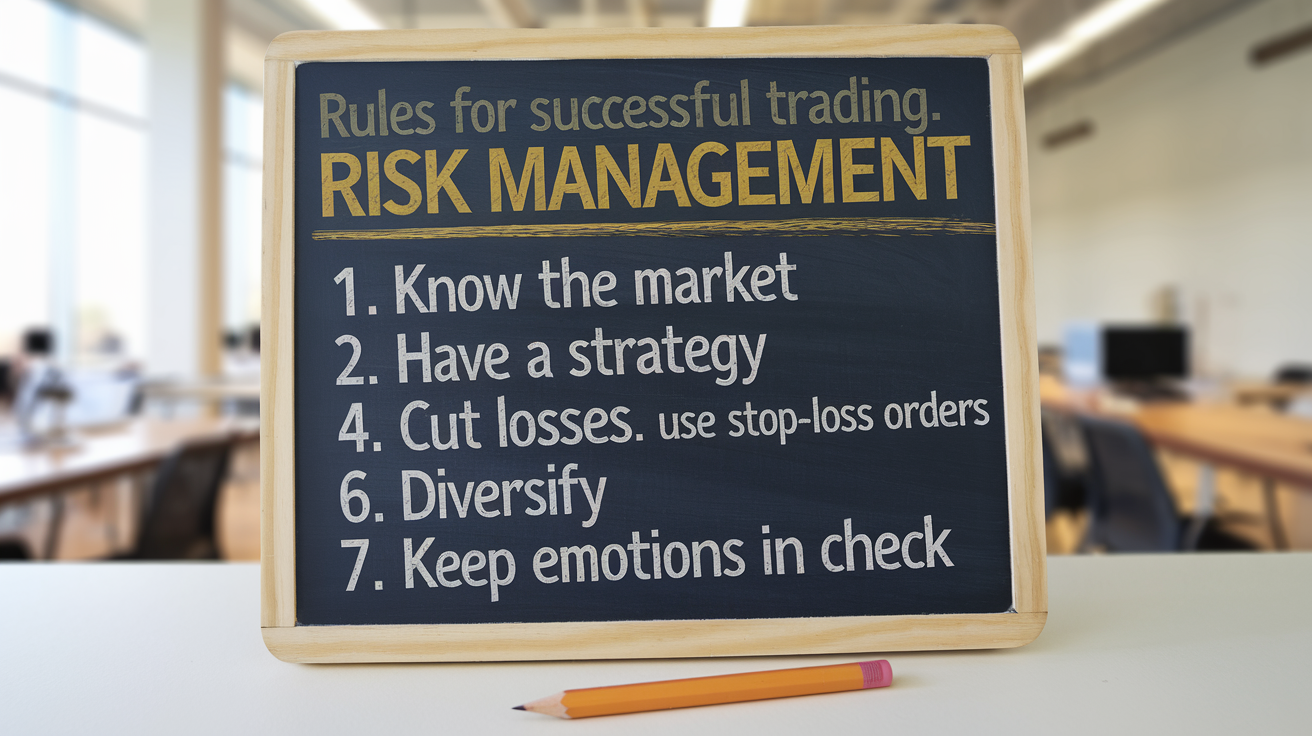
So the numbers do not sound abstract, here is the honest survival statistic that brokers usually hide. In the first year roughly seventy to eighty percent of beginners lose their starting capital, only a few reach steady profit over one to three years, by various estimates ten to twenty percent. I bring this up not to scare you but to remove the illusion of easy money: the path is long, and most people leave not because the market is impossible but because they quit before the method starts to work. The good news is that almost all of these losses are made on the same rake, bloated risk, no system and an abandoned stop, and those are exactly the ones you already know how to avoid.
In short: Success is three prohibitions (not against the trend, do not bloat risk, always a stop) plus years of stamina, not a secret; a beginner and a steady trader are separated not by knowledge but by the ability to boringly repeat the rules when the rest give up.
When the base has settled, it is logical to go deeper by concrete topics. Next I would take trade management, where take-profit, breakeven, and a trailing stop are covered. Further it is worth choosing a trading style to suit your rhythm, if you wish weigh whether copy trading is worth the trust, and if you are drawn to someone else's capital, calmly study prop trading and understand why it is too early for a beginner there.
Video course on this topic on YouTube: Trading Basics
Frequently Asked Questions
A way to earn on price movement: you take an asset cheaper, give it back dearer, or the other way round in a short. It differs from investing in timeframe, here minutes and weeks, not years. And it is a craft with an entry barrier, where profit shows only over a long series of trades.
First theory and choosing a method, then practice on demo to an even plus over a series, then a regulated broker and only after that a small live account with a stop and modest risk. At the start what matters most is not to rush and not to bet much.
A long is a purchase betting on a price rise, a short is selling a borrowed asset betting on a fall. A short is harder and more dangerous for a beginner: the loss in it is theoretically not capped from above, because price upward can go as far as it likes.
Losing trades exist even in a working system, roughly thirty out of a hundred, and that is the norm. More dangerous is the spread: red entries can go in a row of five to ten, and on big risk such a streak burns the account, though over the distance you would have been in profit.
Not weeks but years of practice. The method itself takes two or three months, harder is to build up the stamina: to hold the rules, not jack up the risk, and not take revenge on the market. Practice and a trade journal speed up the road, not a pile of watched videos.
No. It is a profession, not a fast-money till: income comes through study, discipline, and time, while the seekers of easy money usually lose it. Profitable trading is boring to look at, it is repeating the same steps by the rules.
About the Author
Author: Igor Arapov — independent researcher in the psychology of investment decisions and behavioral finance, practising trader since 2013, founder of arapov.trade, author of a trading book series (ORCID: 0009-0003-0430-778X).