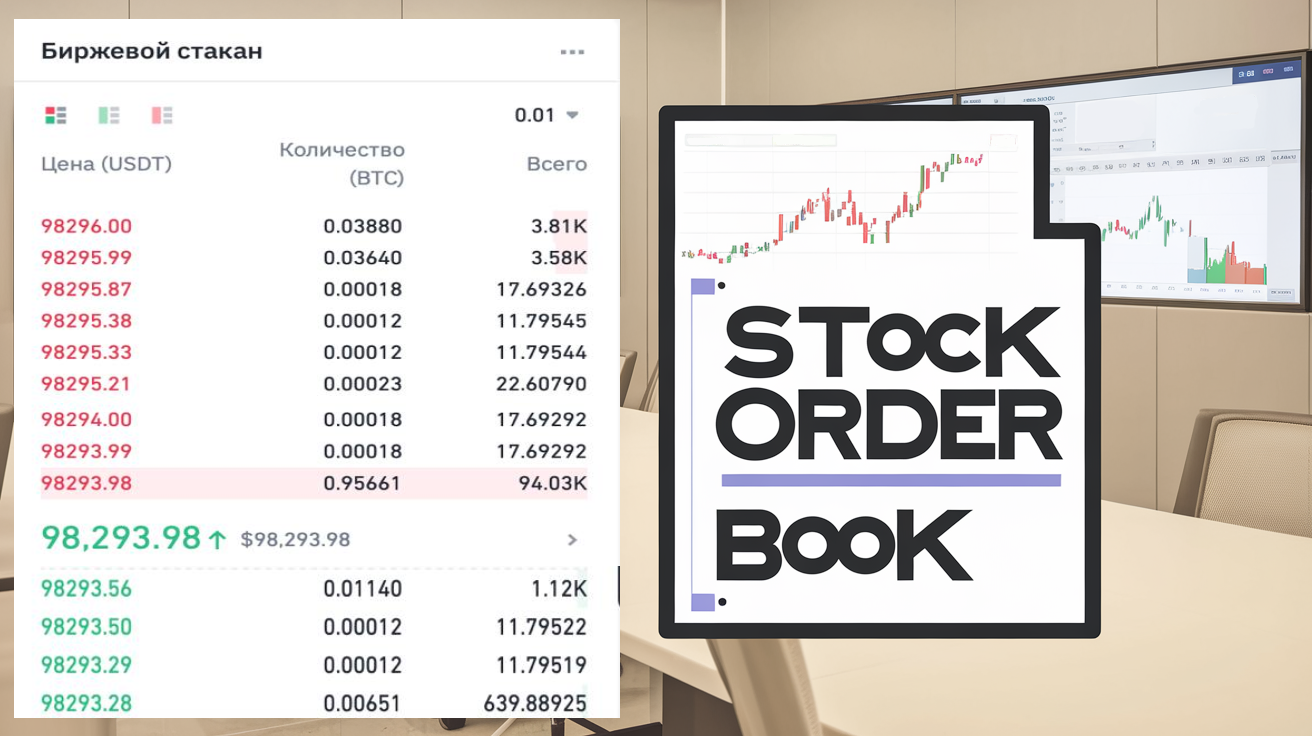
Banks, funds and market makers move price, not the crowd of private traders, and that single fact is the foundation the whole concept rests on. Three things set these players apart from retail: money, information and patience. The crowd buys high and sells low, the large player does the opposite, and learning how they act is the real groundwork for reading any chart.
A mountain of terms and mystique has grown around Smart Money: order blocks, imbalances, stop hunting, BOS, CHoCH, and a beginner drowns in them fast. Let's go through it calmly and without magic: who the smart money are, how they quietly build a position, how manipulation and stop hunting actually work, how to read their footprint on the chart, and how to walk behind large capital rather than against it. And along the way I will show why, without volume, every talk of smart money turns into guesswork.
In this article we'll cover:
- Smart Money are large players whose capital and information give them an edge over the crowd;
- they build a position quietly and in pieces, and collect liquidity through false breaks of levels;
- stop hunting and traps are not a conspiracy but work with the predictability of the crowd;
- their footprint shows in volume, liquidity grabs and accumulation phases, and you walk behind them, not against them.
Let's start with who the smart money are and how they differ from the ordinary trader.

Who the Smart Money are and how they differ from the crowd
Smart Money are large professional market participants who hold big capital and access to information unavailable to the ordinary trader. Literally, the money that moves the market.
Behind the broad term sit very concrete players: large commercial and investment banks, hedge funds, pension and investment funds, and market makers. What unites them is a size of capital able to move whole markets. The main difference from retail is not some secret knowledge but the approach. The crowd trades on emotion, rushes and chases the move, while large capital acts coldly, to a plan, and can afford to wait. The gap usually comes down to one line: the crowd buys high and sells low, the large player does the reverse. At the peak of euphoria, while retail greedily loads up, professionals are already booking profit and selling them their stock; at the bottom of panic, when the crowd dumps in fear, smart money calmly picks it up. Say price ranges for three weeks between 1.0784 and 1.0921: at the lower edge, where it is cheap, large capital builds a position while the crowd sells in fear, and then price breaks to the upside.
The edge of smart money rests on three things: capital, information and patience. Retail usually acts as the weak hand and lags, because it reacts to price once the move is already visible, and trades on emotion. Large capital positions itself in advance with limit orders, and by the time the crowd notices the trend it is often already made. So the point of the Smart Money concept is not to guess a secret, but to see what the professionals are doing and not end up on the other side of their trade.
In short: Smart Money are large pros with big capital and information; what separates them from the crowd is not a secret but the approach: they buy cheap in panic and sell dear in euphoria, while retail does exactly the reverse.

How smart money build and unload a position
A position big enough to move the market cannot be bought in one click, and that single constraint shapes everything large players do. Put a huge buy order in and price jumps on the spot, a good fill is gone, and other professionals see that order and pull their offers. So large players act quietly and in pieces: they split the big volume into many small orders, sometimes using hidden iceberg orders, so as not to give away their real size.
The quiet build at the bottom is called accumulation, the sell-off at the top distribution. These are essentially the market phases of the Wyckoff method that the whole of volume analysis rests on: the large player stacks a position in a range without letting price rise much, then hands it to the crowd at high levels. Grasping these phases sharpens the picture at once, and they are walked through step by step in the course section on the Wyckoff phases.
In short: The large player cannot buy all at once without shoving price, so it splits volume into small and iceberg orders; the quiet build at the bottom is accumulation, the sell-off at the top is distribution by Wyckoff.

The Wyckoff phases behind the Smart Money concept
A name stays just a label until you see the script large capital plays over the long run, so it pays to look at it. Richard Wyckoff laid this script out a century ago, and it is the one I lean on. The market moves not at random but through repeating phases, accumulation, trend and distribution, and the handiest way to picture them is as price boxes with trends strung between them.
The Accumulation phase is a range, most often after a long fall, in which smart money quietly build a position from a frightened crowd selling at the bottom. It looks like a dull band, but that is exactly where the future move is set up. Then the trend phase begins: most of the supply is already in strong hands, the large player is in no hurry to give it back, an imbalance appears, and price travels the path of least resistance their way. The path of least resistance is simply the direction it is cheap and convenient for large capital to drive price, and while volume confirms that direction, fighting it costs you. In practice a simple watch helps tell accumulation from distribution: where price stands for a long time, a large position is building, and the side is given away by the volume on the way out of the box. At the top, after a long rise, distribution unfolds, where the same capital quietly hands the crowd, on euphoria and FOMO, what it bought cheap.
Here sits a subtlety I keep stressing. A Demand deficit is a situation where a downward move starts not from seller aggression but because the buyer simply stepped away and there is no one left to hold price up. The crowd waits for a loud crash with heavy selling, while in reality the market often slides quietly, without it, and that throws a beginner off. Understanding the phases turns Smart Money from mysticism into plain mechanics: you stop asking who moves price and start seeing which stage of its cycle large capital is in.
Here it is worth calling the thing by its name: what is sold today as Smart Money and SMC is in essence a modern repackaging of Wyckoff. The vocabulary is newer, order blocks, imbalances, break of structure, but the root is one, the phases of accumulation and distribution described a hundred years ago. I hold to the root because it explains why the patterns work, not merely what they are called.
In short: Behind Smart Money sits a three-phase Wyckoff script: accumulation at the bottom from a frightened crowd, a trend along the path of least resistance and distribution at the top on euphoria; and a fall often starts not from seller pressure but from the buyer leaving, a demand deficit.
Control and manipulation: liquidity, not a conspiracy
The secret room of villains exists only in a beginner's head. In reality large players simply go where the liquidity is, to fill a big volume without slippage, and liquidity is the crowd's stops and orders, which it predictably parks in the same places. Fear and greed herd them into those predictable spots, and it is that predictability the large players use.
The word manipulation deserves a line of its own, because myths cling to it. Real illegal manipulation does exist. Spoofing, for instance, where large orders with no intent to fill paint a fake demand and are then yanked, and for that regulators like the CFTC and SEC do punish people, up to prison terms. But what traders casually call manipulation is usually something else: the ordinary work of the market collecting liquidity at obvious levels. A market maker, by agreement with the exchange, holds a two-sided quote and earns on the spread, the gap between the buy and the sell price, not on personally ruining a retail trader. Under the round level 1.1000, say, the crowd's stops pile up, price is pushed to 1.09927 for a minute, that liquidity is collected and price turns back, and that is a textbook stop sweep.
Reading such moves comes back to volume. If money is poured in fast at an important level, volumes rise and price holds, a large player is in the market. It is fair to say a word about today's market too: clean formations are scarcer than a few years ago, volumes are deliberately muddied, split and hidden. But the logic itself has not gone anywhere, and volume still gives away whether interest is real or the false break is empty. So I do not trust a pretty picture without a confirmation of activity, and I check every supposed footprint of large capital against what volume shows.
In short: Control is not a conspiracy but work with the predictability of the crowd: illegal spoofing exists and is punished, but ordinary manipulation is collecting liquidity at obvious levels, and a market maker lives off the spread, not off your blow-up.

Smart Money traps: stop hunting and the false breakout
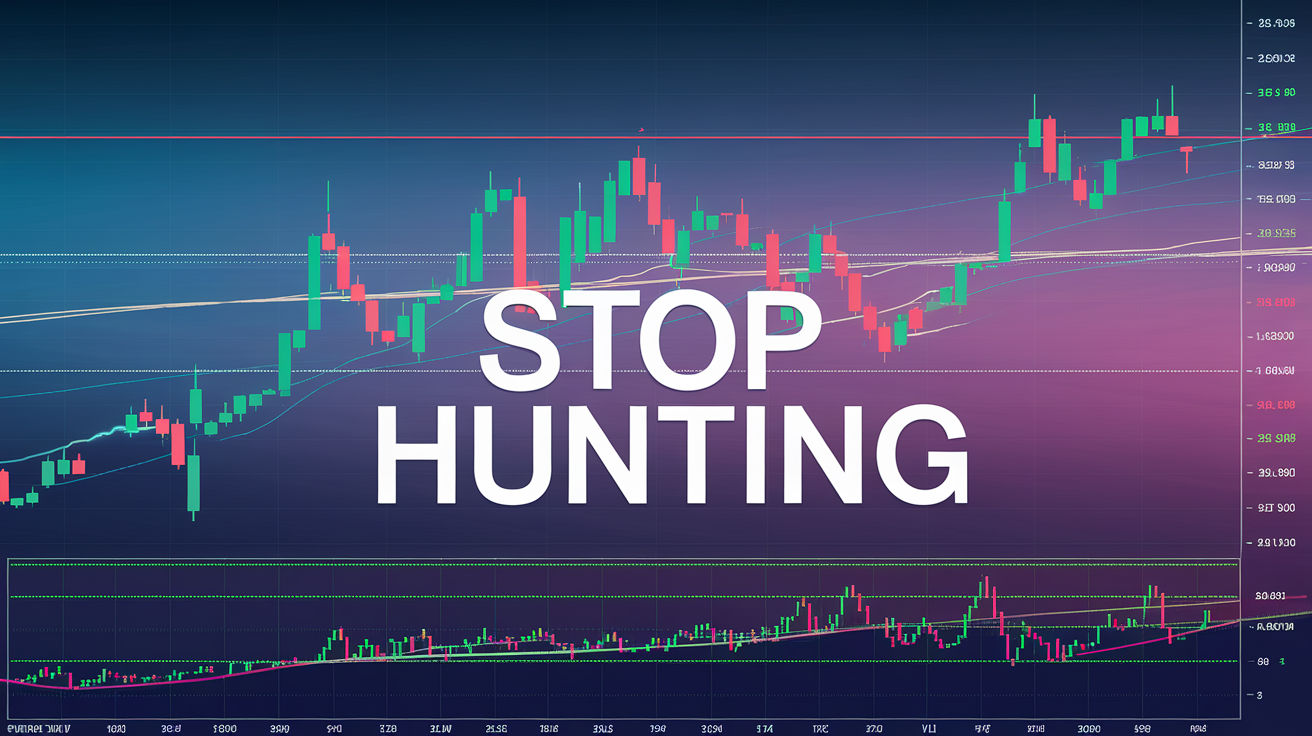
Stop Hunting is a deliberate push of price toward zones where traders' stop-losses are clustered, to trigger those orders and use them as liquidity. In plain terms, a stop sweep.
The logic is simple. To enter a large position the big player needs a counterparty, someone's opposing liquidity, and the crowd's stops are ready liquidity gathered in one spot. Beginners place them predictably: just past a local high or low, under round levels. The large player drives price past that level with a sharp impulse, the stops fire in a cascade and create momentum, then the market turns and goes the other way, leaving the stopped-out traders behind.
A False breakout is a false break of price beyond an obvious level that triggers stops and snaps back quickly. Price grinds at a level for a while, then bursts past it on a sharp impulse, the crowd believes the breakout and joins the move, but a couple of candles later price comes back and leaves the other way. Volume tells it apart from a real one: a real breakout runs on rising volume and holds beyond the level, a false one pops on thin, fading volume and snaps back. By direction the false breakout splits into two mirror kinds. A bull trap is a false break up that catches buyers. A bear trap is a false break of support that catches sellers short before a turn up.
Protection from traps starts from a plain takeaway: since retail stops are the target, do not place them in the most obvious spots, and do not enter the market head-on on the breakout. It is safer to wait for the manipulation to play out, for price to return and confirm the turn with a retest, a second touch of the level. Traps hit hardest at the emotions, because it is fear and greed that make you jump onto a leaving train. I will name the weak spot plainly: telling a trap in the moment is hard, the market gives no clean signal, and some false breaks stay arguable. Even so, the habit of waiting for confirmation by volume rather than guessing protects the account far better than a head-on entry.
In short: The two main traps are stop hunting and the false breakout past an obvious level: a bull trap catches buyers, a bear trap sellers, and what tells them from a real move is volume, not the false break itself.
How to spot the presence of Smart Money on a chart
A large player hides on purpose, yet hiding without a trace is impossible, and three of those traces are worth knowing. The first and main one is volume: an abnormal spike at the right spot gives away that a large player has entered. The second trace is a liquidity grab, a sharp false break of a level where the crowd holds its stops, with a quick snap back. The third marker is price behaviour in zones of accumulation and distribution: a long range with a squeeze, then a sharp exit.
I split every market participant into two groups: those who understand the game, and those who feed it. Large capital earns on the crowd's mistakes, and that is not a conspiracy but the nature of the market. You cannot beat the smart money, but learning to walk behind them is entirely doable. Without volume, though, any talk of smart money turns into guesswork: you can draw zones and arrows on the chart all you like, only volume shows whether a real large player was there or it was just noise. How to read these traces through volume is broken down step by step in the course.
In short: A large player is given away by three traces: a volume spike, a liquidity grab through a false break and an accumulation range before the exit; but without volume any zone is guesswork, so I check every trace against activity.

Why I read Smart Money by volume, not price alone
Mainstream SMC and I disagree on one thing, and I would rather say it outright than hint. The classic concept is built almost entirely on price action: the trader marks order blocks, imbalances and liquidity zones off the price action alone. The trouble is that any rectangle on a chart is easy to draw after the fact, and on history it will look convincing. An order block by itself is only a guess that large money was here, and whether it actually was, pure price does not prove.
So to the price markup I add what I consider the real footprint of large capital, exchange volume. Real trades leave real numbers. On the CME exchange, where volumes are genuine rather than drawn, you can see whether the zone truly held ultra-high volume or it is just a pretty level with no one behind it. The logic is direct: elevated volume on up bars gives away the buyer's strength, on down bars the seller's, and it is volume that confirms a large player stands behind the level, not my imagination. On unregulated crypto exchanges I treat the volume figures themselves with caution, they are painted, which is why I lean on verified data. The method of reading volume itself I cover in the section on volume analysis.
Let me show how this looks in practice. Say bitcoin's price returns to a zone I marked in advance as a possible order block. The zone on its own promises me nothing. I open the CME volume data and look at what happened while price was forming that zone. If ultra-high volume stood there, a large player was genuinely active and the zone earns attention. If volume was sluggish, I mentally erase that pretty rectangle, however convincing it looked on history. I apply the same filter to round levels the crowd is fixed on: what matters is not the level itself but whether real volume left a trace on it.
This pays off most on false breakouts. When price false breaks a level, knocks out stops and snaps back, I want to see that notable volume passed both on the false break and on the return. Then it is not a random spike but a liquidity grab by a large player, and an entry after such a return, with the stop beyond the extreme of the false break, is far sturdier for me than an entry into a bare zone with no confirmation. Volume, in effect, turns the markup from drawing by eye into a testable hypothesis: there is a footprint of big money, or there is not.
There is a practical payoff too, which is the whole point. Pure technical analysis, in my experience, gives a win rate around six correct trades out of ten. Adding volume and Smart Money logic lifts it to roughly seven out of ten. It sounds like a small bump, but over the long run, with sane risk per trade and a risk to reward of at least one to three, that is exactly what splits a profit from a loss on the account. This is, of course, my own statistic and my own style, not a promise of a result, but volume long ago stopped being optional for me and became a mandatory check on any pretty zone. Roughly put, price shows where it might be interesting, and volume answers whether real large capital stands behind it or only my expectations.
In short: Pure SMC marks order blocks and imbalances off price alone, which is easy to fit after the fact; I add exchange volume from CME as the real footprint of large capital, and it lifts the win rate from about six to seven out of ten, which at one to three over the long run is what decides it.
SMC building blocks: liquidity, order block, imbalance
A handful of notions hold the entire concept, and the gist is simpler than the jargon suggests. Liquidity is the places where many orders and stops have piled up, usually at equal highs or lows: the large player needs it to fill its volume, so price is often driven there on purpose with a false break. Such a stop sweep is called a liquidity grab, or a shakeout.
An Order block is the last opposing candle before a strong impulse, the zone where large capital was building a position. The last bearish candle before a sharp rise, for instance: price often returns to that zone. An imbalance is a gap on the chart left after too fast a move, when part of the orders did not get filled, and price often goes to close it. There are two structural terms as well: a break of structure (BOS) is a close of price beyond the previous extreme in the trend's direction, confirming continuation, while a change of character (CHoCH) is the first sign of a possible reversal, when structure breaks against the trend. I am not against these terms, they are useful, I just hold that a beginner needs one working scheme plus volume more than a dozen memorised acronyms.
This very vocabulary, order block, imbalance, BOS and CHoCH, entered retail trading largely through the Inner Circle Trader (ICT), the alias of Michael Huddleston. He repackaged the older logic of Smart Money and Wyckoff into a set of recognisable terms, and today the abbreviation SMC most often points to his presentation of it. I stay relaxed about ICT itself: the terminology is convenient, but I keep verifying it with volume rather than faith in tidy labels.
The collection of stops at a level itself is called a liquidity grab, or a shakeout: price is deliberately driven into the cluster of orders, they are knocked out, and only then is it led the player's way. The scheme is one and the same and works on forex, on futures, on crypto, because the principle is everywhere identical: the asset changes hands, and the large player needs opposing liquidity. First the impulse level is found, where capital was active, then they wait for liquidity in its range to dry up, then for a false break, and only after that grab do they enter alongside the large player. The instrument changes, but the logic of building and dumping a position stays the same.
In short: The concept stands on liquidity (clusters of stops at obvious levels), the order block (the last opposing candle before an impulse), the imbalance and structure BOS and CHoCH, but behind all the terms sits one and the same build and dump of a position by the large player.
The biggest myths and mistakes in SMC
Popularity brought myths, and it is on them that beginners lose money. The first myth is the conspiracy. Hearing about manipulation, a person pictures a secret room where villains personally hunt his exact stop. There is no personal hunt, only a large player who needs liquidity to fill a big volume without slippage, and who naturally goes where that liquidity is plentiful, to the clusters of stop-losses behind obvious levels. It is the maths of flows, not magic and not malice against you personally. Understanding this alone removes half the fear of the market.
The second myth is faith in magic markup. A beginner learns about order blocks and imbalances and starts entering every one of them in a row, treating the zone as a signal by itself. But the market draws dozens of such rectangles a day, and most of them mean nothing. Without the context of the phase and without confirmation by volume it is reading pictures, which looks great on history and falls apart in real time. The third and costliest mistake is not about markup at all but about discipline: you can chart a graph perfectly and still blow the account if you enter without a stop and without a calculated risk per trade. Any concept is only a map, and what saves money on the account is risk management, not the beauty of the lines. Curve-fitting to history sits here too: a markup that perfectly explains every past reversal is almost always useless live, since it explains the past rather than predicting the future.
So my advice sounds dull but it is to the point. Do not breed terms and do not chase fashionable acronyms. Hold to a simple chain: define the market phase, find the key level, wait for confirmation by volume and enter with a preset risk. Everything beyond that is more often decoration than a real edge. And one more thing from experience: there is no need to chase every setup. The best entries, where phase, level and volume line up together, the market hands out sparingly, and it is those worth waiting for patiently, rather than padding your trade count just to feel busy.
In short: The main SMC myths are the conspiracy (in reality the large player simply needs liquidity at clusters of stops) and faith in magic markup (the market draws dozens of zones, and without phase and volume it is guesswork); but the costliest of all is entering without a stop and a calculated risk.
How I trade Smart Money: entry scheme and protection
Four steps cover the whole of how I enter, and I keep terms to a minimum on purpose. First I find the impulse level where the large player was active. Then I wait for liquidity in its range to dry up. Then for a false break, that very manipulation when price pierces the level and returns at once. And only after that liquidity grab do I enter alongside large capital: stop beyond the extreme of the false break, target on the opposite level, and I keep risk to reward from 1 to 3. The fact of a trap firing I read not as a threat but as a signal, and if there was no false break before the entry, it is most likely ahead, because without manipulation the large player simply will not gather the volume it needs.
Protection follows from the same logic. You do not give up the stop, trading without one is a straight path to a blown account, but you also cannot place it where everyone does: tight behind an obvious extreme or under a round number is a magnet for getting swept. The stop is moved out with room, leaning on structure, and you do not enter the market head-on on the breakout. A beginner needs first to master structure and volume, work on higher timeframes with one instrument and practise on a demo account, rather than memorise every term at once.
Step by step for a beginner it looks like this. First structure and volume: trend, flat, levels, spikes of activity, the foundation the whole concept stands on. Then work on higher timeframes, the daily and four-hour, where there is less noise, and one instrument instead of ten at once. Then practice on a demo account with real quotes, a trading journal with the reason for every entry, and only then a move to small real sums. In a trade I risk a small share of the account, to sit calmly through a string of losses, and so as not to take a stop-run for a real move I always check against the higher timeframe and volume: a false break runs on thin volume and does not hold, a real exit is backed by activity.
My main rule stays unchanged: first see the footprint of large capital on volume, then enter, not the other way round. This is no holy grail, a false signal happens, so I think in probabilities, I do not work this scheme on news, and it is not advice to you personally but my own working scheme. How to read liquidity and volume on a live chart I show in the video on the three rules of Smart Money, and the whole base step by step I gathered in the free trading course.
In short: The scheme is one: find the impulse level, wait for liquidity to exhaust and the false break, and only after the grab enter behind the large player with the stop beyond the false break at risk to reward from 1 to 3; the stop is not where everyone puts it, the entry is not head-on, and a trap to me is a signal, not a threat.
Video course on this topic on YouTube: Smart Money
Frequently Asked Questions
These are the large professional players: banks, funds and market makers. They hold big capital and access to information, so they are the ones who move price, while the retail crowd usually follows behind.
By approach. The crowd trades on emotion, rushes and chases the move, buying high. Large players act coldly, to a plan and with patience, buying low and selling high.
It is a deliberate push of price toward zones where stop-losses are clustered, to trigger them and collect liquidity. Large players drive price into where the crowd's stops sit, take those orders and turn the market around.
The main tell is volume. A real breakout runs on rising volume and holds beyond the level, while a false one pops on thin volume and snaps back into the range fast. A quick reversal right after the spike is a clear trap.
By the footprints: abnormal volume spikes, liquidity taken through false breaks of a level, and the accumulation and distribution phases. The main tool here is volume analysis, without it any zone is guesswork.
Do not place your stop in the most obvious spots, tight behind an extreme or a round level, give it room. Do not enter at the moment of the false break, wait for the trap to play out and for price to confirm the reversal on volume.
About the Author
Author: Igor Arapov — independent researcher in the psychology of investment decisions and behavioral finance, practising trader since 2013, founder of arapov.trade, author of a trading book series (ORCID: 0009-0003-0430-778X).