Horizontal marks on a chart, built from mathematical proportions, show where price is likely to react after a move. The main correction levels are 38.2, 50, and 61.8 percent. These are zones of probable reaction, not precise reversal lines, so they only work together with real support and resistance and confirmation by volume.
Fibonacci helps you sketch in advance where price might stall or turn after a move. It works on any market: forex, stocks, crypto, gold. Here is my take on it straight away: for me it is a guide, not a precise forecast. I look at it only alongside real levels and volume, not as a standalone signal.
In this article we'll cover:
- Fibonacci marks zones of probable reaction, not precise reversal lines
- the key correction levels are 38.2, 50, and 61.8 percent, plus extensions for targets
- the grid is drawn between two significant extremes, low to high or the other way round
- a level is worth trusting only where it lines up with a real level and is confirmed by volume
Here it is in order: what Fibonacci levels actually are, how to draw the grid correctly, which levels are key, how to trade a pullback, and how to pair the tool with volume analysis.
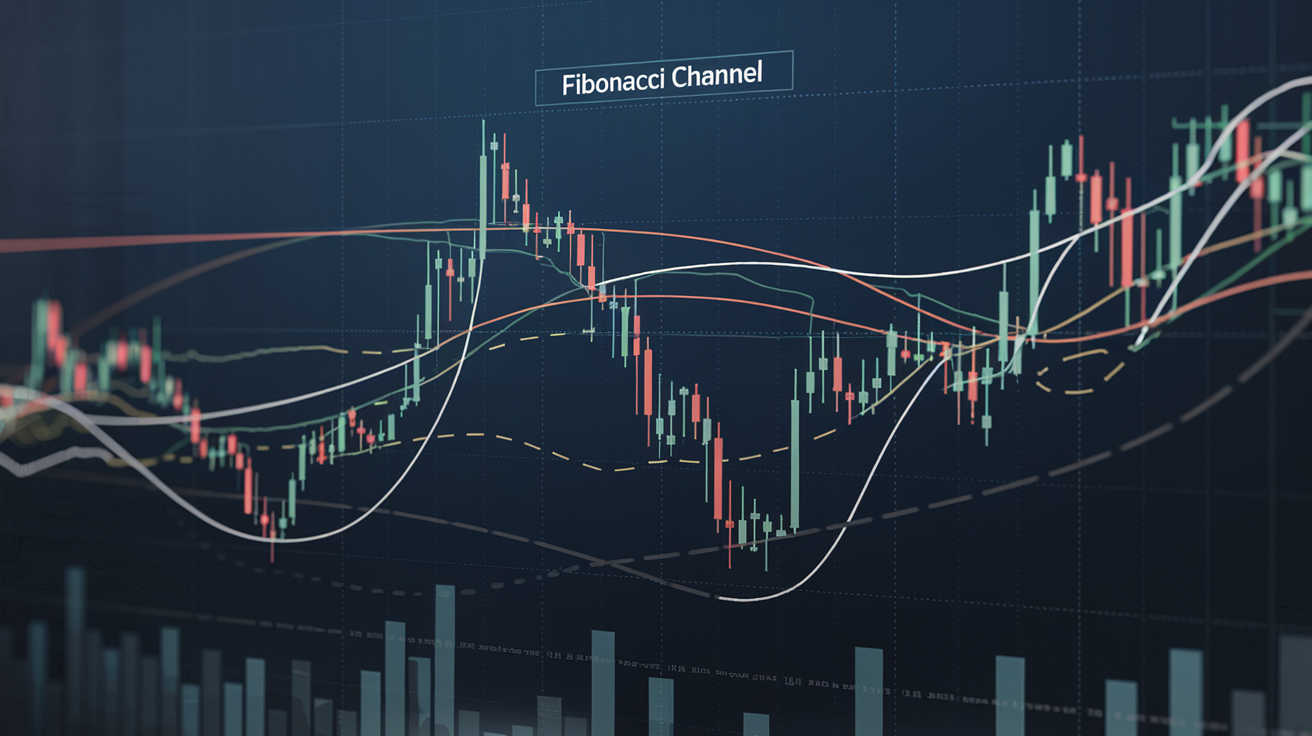
What Are Fibonacci Retracement Levels?
Fibonacci retracement levels are a technical-analysis tool that marks on a chart the proportions of a possible pullback in price after a move. At the base is a number sequence described by the mathematician Leonardo Fibonacci back in the thirteenth century, where each number is the sum of the two before it.
From the ratios between neighbouring numbers in that series come the very coefficients we see on the grid. The most famous of them, 61.8 percent, is called the golden ratio; it shows up in nature, from shells to the arrangement of leaves. On the market this proportion was carried over as the expected depth of a pullback. The tool itself is a part of technical analysis, and it should be treated as one of its layers, not as a separate system. And one honest caveat right away: pretty old mathematics does not mean the market is obliged to obey it. Price reacts at these marks largely because millions of traders see them and place orders there, so what works is not the magic of numbers but the mass attention to them.
In short: Fibonacci marks the probable depth of a pullback, but what works is not the magic of numbers, it is the mass attention traders pay to these marks.
How to Draw Fibonacci Retracement on a Chart
Any terminal can draw the grid, TradingView for example. The principle is one: take two significant extremes and stretch the tool between them. In an upward move you drag from a local low to a high, in a downward one the other way, from a high to a low. The platform places the levels in between by itself. It is important to drag along the body of the impulse, from the point the move started to the point where it ran out of steam, not along random wicks.
The main beginner mistake here is drawing the grid on small random swings. Take only clear impulse moves, otherwise you get a mush of false levels that predict nothing. Besides retracements there are also Fibonacci extensions, levels beyond the move used as target guides after a breakout. The main ones are 127.2, 161.8, and 261.8 percent. If price pulls back to 61.8 and continues with the trend, the 161.8 extension is handy to keep in mind as a place to take part of the profit. Practise on a single instrument until drawing becomes automatic, otherwise on a live market you will drag the grid to fit a move that already happened, and that is self-deception. I show the drawing on a chart in the clip on how to build Fibonacci levels.
In short: I drag the grid along the body of a clear impulse, from the start of the move to its end, while on small swings it only gives a mush of false levels.
The Key Levels: 38.2%, 50%, and 61.8%
There are not many key correction levels. The 38.2 percent level is the first significant zone: a shallow pullback to it speaks of trend strength, buyers or sellers come back fast. The 50 percent level is not technically from the Fibonacci series, but it matters psychologically, because price often retraces exactly half a move. The 61.8 percent level, that same golden ratio, is considered the strongest zone and the optimal entry point with the trend. Deeper sits 78.6 percent, beyond which the odds of the trend continuing drop noticeably, and the pullback starts to look more like a reversal. In practice I also keep in mind the link with market phase: in a strong trend price usually settles for a shallow pullback to 38.2, while a deep move to 61.8 and below shows up more often when the trend is already tired and the fight between sides has sharpened.
Let me stress the main thing right away: price almost never reverses exactly on a mark. So treat each level as a support or resistance zone several points wide, not as a thin line. A bounce is not a point but a reaction in the area of the level, and expecting millimetre precision from the tool is pointless. In practice I look not at the line itself but at how price behaves once it reaches the zone: is it braking, are long wicks appearing, is volume rising on the turn. That behaviour is the signal, not the fact of touching the mark.
In short: The 61.8 level is the strongest, but price does not reverse exactly on the line, so I read the reaction in the zone rather than the fact of a touch.
A Fibonacci Entry in Practice: the Setup, the Stop, and the Target
So what does a usable Fibonacci trade actually look like, beyond the theory. In an uptrend I wait for the pullback to reach a Fibonacci zone that also sits on a real horizontal level, most often the 61.8, or the shallower 38.2 when the trend is strong; the Fib mark on its own is never the trigger. Then I watch how price behaves in that zone, looking for a brake, a long wick that rejects the level, a clean reversal candle like a pin bar or an engulfing, and a pickup of volume on the turn. Only when the zone and the price action agree do I treat it as an entry, and always with the trend, never against it.
The stop has a logical home as well. Entering off the 61.8, I hide it just beyond the next level, the 78.6, because if price slices cleanly through there the whole retracement read was wrong and the move is more likely turning into a reversal than pausing. The target I take from structure, the prior swing high or a Fibonacci extension such as the 161.8, scaling out in parts rather than betting on one exit. Built this way a trade has a defined risk and a reward several times larger, and that is the only reason the method survives the run of misses any level-based approach will hand you. The grid itself only frames where to look, while the real level, the volume and the risk maths do the work.
In short: A usable setup is a pullback into a Fibonacci zone that overlaps a real level, with the trend, confirmed by a reversal candle and volume; the stop goes just beyond the next level (the 78.6 when entering off the 61.8), and the target comes from structure or an extension like the 161.8.
Do Fibonacci Levels Actually Work? Combining Them With Volume
Now the most important thing. A Fibonacci level on its own is not a signal. Price is not obliged to respect it, and in isolation it often lies. It gains real strength only in combination. I trust a mark only when it coincides with a genuine support or resistance level, and the price reaction there is confirmed by volume and a clear pattern like a pin bar or an engulfing. Several factors lining up in one zone, that is the strong signal, while a lone line is not.
There is also a flip side people rarely mention. These levels are popular, everyone sees them, and big capital knows perfectly well where the crowd will stack orders. So a pretty Fibonacci mark is often used to collect liquidity: price is driven past it, stops are swept, and it reverses. That is the same fakeout, and how big capital works with these liquidity levels is covered in detail in the course. And here is my main takeaway from all these years: Fibonacci lines alone feed no one. I am not saying Fibonacci does not work, that would be untrue. I am saying it does not work on its own, and those are different things. As a guide it is useful, as a standalone signal it is dangerous. I use the mark to sketch in advance where to pay attention, but I take an entry only where it lines up with a real level and is confirmed by volume, keeping a reward-to-risk of at least one to three, so a single mistake does not knock me out of profit. The reward-to-risk matters to me more than entry precision: even if fewer than half of ten trades on such a combination work out, with targets three times the stop the account still grows. This is not advice to you personally, it is how I act. It sits naturally with volume and market phase, read through the Wyckoff method. A tool close in logic, also leaning on proportions, is Elliott waves.
In short: A single Fibonacci line lies, so I take an entry only where it lines up with a real level and volume, keeping a reward-to-risk of at least 1 to 3.
Frequently Asked Questions
Horizontal marks on a chart built from mathematical proportions. They show zones where price is more likely to react after a move. The main correction levels are 38.2, 50, and 61.8 percent.
The 61.8 percent level, the golden ratio, is considered the strongest. The 50 percent as a psychological midpoint and the 38.2 percent as the first correction also matter. But any of them works only with confirmation, not on its own.
Pick two significant extremes. In an upward move drag the tool from the low to the high, in a downward one from the high to the low. Build only on clear impulses, otherwise you get a lot of false levels.
Just beyond the next level. If you enter off the 61.8 retracement, the stop sits past the 78.6, because a clean break through there means the retracement read was wrong and a reversal is more likely than a pause. That gives a defined risk, and pairing it with a target from structure or an extension keeps the reward several times the risk.
Levels projected beyond the original move and used as profit targets after a breakout: the common ones are 127.2, 161.8, and 261.8 percent. If price pulls back, holds a retracement and resumes the trend, an extension like the 161.8 marks a sensible place to take part of the profit.
In my experience no. In isolation a Fibonacci level often gives false signals, since price is not obliged to reverse on it. It works only together with real levels, volume, and a clear pattern.
Largely because of mass use: traders place orders at the same marks, and you get a self-fulfilling-prophecy effect. But big capital exploits this too, collecting liquidity at popular levels.
About the Author
Author: Igor Arapov — independent researcher in the psychology of investment decisions and behavioral finance, practising trader since 2013, founder of arapov.trade, author of a trading book series (ORCID: 0009-0003-0430-778X).