The cryptocurrency world has many symbolic dates, but May 22 holds a special place in every digital asset enthusiast's calendar. On this day in 2010, an event occurred that forever changed the perception of Bitcoin as a practical financial instrument. Programmer Laszlo Hanyecz paid 10,000 BTC for two pizzas, completing a transaction that would go down in history as the first commercial operation using cryptocurrency. This seemingly mundane purchase became a turning point for the entire industry. To understand this topic more deeply, I recommend studying crypto trading.
Before this event, Bitcoin existed solely as a theoretical concept and discussion topic on specialized forums. The digital currency, created by the mysterious Satoshi Nakamoto a year earlier, attracted attention from technical specialists and cryptographers but remained disconnected from the real economy. The pizza purchase demonstrated to the world that virtual coins could function as a full-fledged medium of exchange, not just as objects of speculation. This topic is directly related to Bitcoin halving. Much like how central banks determine the fate of traditional currencies, the first Bitcoin transaction laid the foundation for a new financial paradigm.
Timeline of the Historic Deal
The story began on May 18, 2010, when Laszlo Hanyecz posted a message on the Bitcointalk forum, offering to exchange 10,000 bitcoins for two large pizzas. The offer seemed eccentric—the entire amount was valued at approximately $41. After four days of silence, British student Jeremy Sturdivant responded.
Sturdivant ordered two Papa John's pizzas for delivery to Hanyecz's Florida address, paying with his credit card. In return, he received 10,000 BTC. The transaction was recorded in the blockchain, becoming proof that cryptocurrency was suitable for real-world transactions.
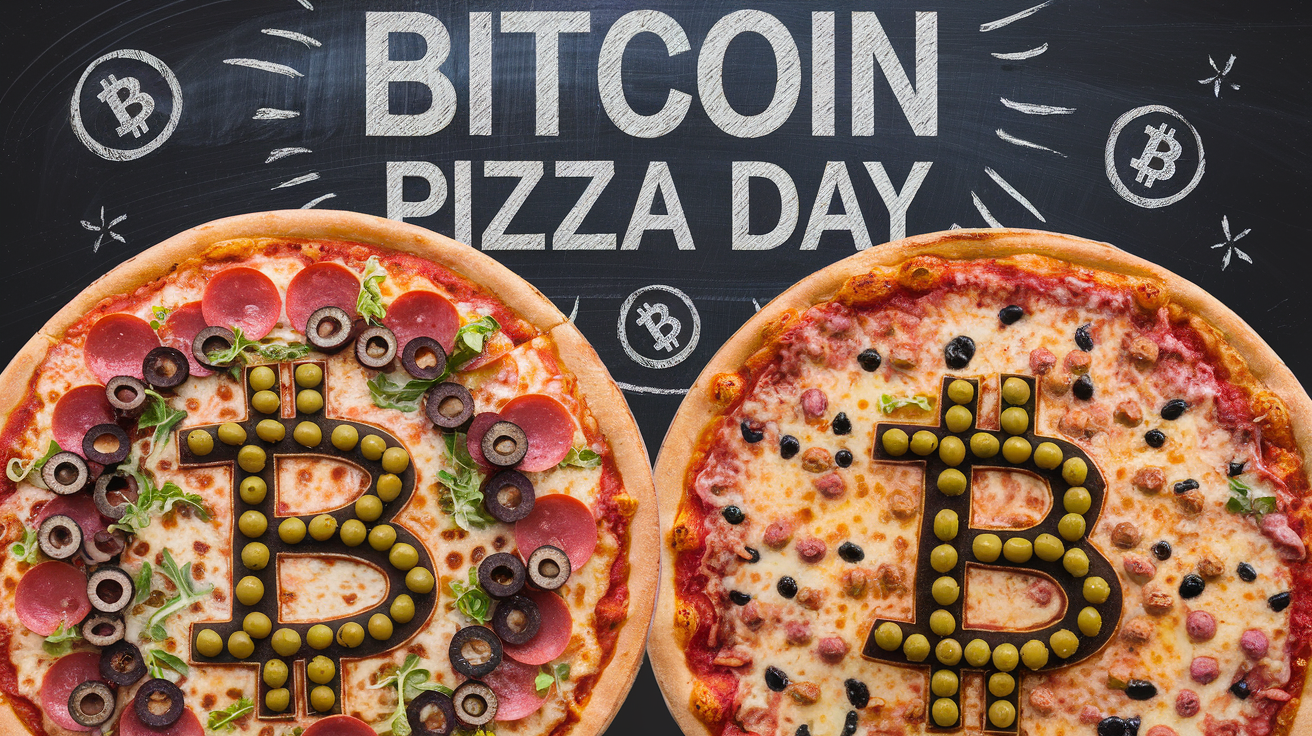
Remarkably, Hanyecz didn't stop at one purchase. Over the following months, he continued buying pizza with bitcoins, spending approximately 100,000 BTC total. These transactions stimulated other enthusiasts to experiment with digital payments.
The Mathematics of the Legendary Transaction
The financial side of the deal is staggering when viewed from today's perspective. In May 2010, one bitcoin was worth approximately $0.0041, making 10,000 BTC equivalent to about $41—a perfectly reasonable price for two pizzas with delivery. However, the volatility of the cryptocurrency market transformed this sum into an astronomical figure.
When Bitcoin reached its all-time high of around $69,000 in November 2021, those same pizzas would have been valued at $690 million. Even at more modest prices, the amount runs into hundreds of millions. This story became a textbook example for discussing the concept of HODL—the strategy of long-term cryptocurrency holding. Understanding cryptocurrency risks helps modern investors make more informed decisions.
Significance for the Cryptocurrency Ecosystem
The pizza purchase for Bitcoin solved a fundamental problem of any new currency—it proved its practical applicability. Any asset can claim the role of money, but it acquires real value only when people are willing to exchange it for goods and services. Hanyecz's deal opened the way for cryptocurrency integration into everyday life.
The event demonstrated the advantages of decentralization. The transaction occurred directly between two participants without intermediaries or banks. Bitcoin confirmed its ability to function as an independent medium of exchange. This created a precedent for alternative blockchains and the crypto payments industry.
Evolution of Crypto Payments After Pizza Day
After the historic purchase, the cryptocurrency payments industry began rapid development. Specialized payment processors emerged—BitPay, Coinbase Commerce, BTCPay Server—allowing businesses to accept cryptocurrency easily. Today, thousands of companies worldwide have integrated digital currencies.
Crypto exchanges transformed from niche platforms into major financial institutions. Binance, Coinbase, and Kraken provide infrastructure for millions of users. Before continuing, please read the material about trading and investing. Crypto cards appeared, enabling digital asset payments in regular stores through traditional terminals.
Major corporations began viewing Bitcoin as a legitimate means of settlement. Tesla, Microsoft, PayPal, and Starbucks are experimenting with cryptocurrency acceptance. Some countries, such as El Salvador, have gone even further, recognizing Bitcoin as an official payment method alongside national currency.
Lessons for Modern Investors
The Bitcoin Pizza Day story teaches several important lessons. The first concerns long-term thinking— short-term gain can turn into a missed opportunity with strategic planning. Hanyecz doesn't regret his decision, understanding that his transaction contributed to the development of the entire ecosystem, but his example makes one think about investment horizons.
The second lesson relates to risk management. The mining process in 2010 was accessible to virtually any personal computer owner. Those who kept their coins received impressive returns, but no one could guarantee such an outcome. Understanding market volatility remains critically important for any investor.
Celebration Traditions
Bitcoin Pizza Day has become a full-fledged holiday for the crypto community. Every year on May 22, enthusiasts worldwide order pizza, paying with cryptocurrency. Exchanges run special promotions with bonuses and fee discounts. Social media fills with themed posts and discussions of Hanyecz's story.
Major cities host offline events—meetups, conferences, and themed parties where participants discuss blockchain prospects and share experiences. Some companies use this date for charitable campaigns, collecting cryptocurrency donations for social projects.
Fate of the Transaction Participants
Laszlo Hanyecz continued his programming career and made significant contributions to Bitcoin infrastructure development. He became one of the first developers to implement GPU mining, substantially increasing cryptocurrency extraction efficiency. Hanyecz has repeatedly commented on his famous purchase, emphasizing that he has no regrets—his goal was to demonstrate Bitcoin's practical utility. Jeremy Sturdivant, who accepted payment in Bitcoin, subsequently spent the coins on travel, not anticipating such rapid price growth.
Conclusion
Bitcoin Pizza Day embodies the transformation of cryptocurrencies from an abstract idea to a practical instrument that changed the planet's financial landscape. The simple purchase of two pizzas became a symbol of innovation, courage, and faith in technological progress. To consolidate the material, also study the cryptocurrency basics. This story reminds us that great changes begin with small steps—with pioneers' willingness to take risks and apply new ideas in practice.
The annual celebration on May 22 unites the crypto community, strengthens connections between enthusiasts, and draws public attention to digital asset possibilities. Bitcoin Pizza Day is not just a commemorative date but a symbol of constant forward movement, reminding us how far the industry has come and what horizons are yet to be conquered.
FAQ: Frequently Asked Questions
Bitcoin Pizza Day is a commemorative date on May 22, when in 2010 programmer Laszlo Hanyecz made the first documented purchase of a real product with Bitcoin, exchanging 10,000 BTC for two pizzas.
At the time of the transaction in May 2010, 10,000 bitcoins were worth approximately $41 USD. Today, this amount is valued at hundreds of millions of dollars.
Laszlo Hanyecz is an American programmer of Hungarian descent who became known as the person who made the first commercial transaction using Bitcoin.
This date symbolizes Bitcoin's transition from a theoretical concept to practical application. The first purchase proved that cryptocurrency could function as a real medium of exchange.
The crypto community celebrates May 22 with promotions and discounts from exchanges, themed meetups, discussions on social media, and charitable initiatives.
About the Author
Author: Igor Arapov — independent researcher in trading psychology and behavioral finance, practising trader since 2013, founder of arapov.trade, author of a trading book series (Open Library ), (ORCID: 0009-0003-0430-778X ).