Everyone knows Bitcoin, yet few can actually trade it. To me it is first of all a risk asset with wild volatility, and I read it the way I read any instrument: by key levels and by volume. No magic and no hype, just plain work with the chart. How much Bitcoin sets the tone for the whole market shows in its dominance: when it rises, money leaves altcoins for BTC.
I trade crypto rarely; my bread and butter is futures and gold. But Bitcoin stays in my field of view at all times, because it is the first thing to react when investors reach for risk. Here is how it went for me. When I first heard about Bitcoin it traded around 600 dollars. I decided it was a scam and did not buy. Now, as they say, I am kicking myself. Since then I treat it more calmly: I do not guess, I read the chart.
In this article we'll cover:
- for a trader Bitcoin is a risk asset read through levels and volume, not news and hype;
- under the hood it runs on keys, blocks and mining, and whoever holds the keys holds the coins;
- large holders show up in zones of heavy volume, and the cleanest real volume is on CME futures;
- the halving cuts new coin issuance every four years, but it is not a buy button and not a reason to trade blind.
Start with the base: what Bitcoin is and why it is worth anything at all.
What is Bitcoin and how does it work in simple terms
Bitcoin is the first and largest cryptocurrency, digital money with no central bank or state. It runs on a distributed network of thousands of computers. A transfer goes straight from one person to another, with no intermediary like a bank, and the records of transfers live in a shared chain of blocks that nobody can quietly rewrite.
The main feature it is prized for: its quantity is hard-capped. Only 21 million coins can ever exist, and by mid-2026 almost 20 million are already mined. New coins are released on a schedule baked into the code, and the flow thins over time. I explain it simply: the scarcity is programmed in advance, unlike ordinary money a state can print at will. By mid-June 2026 Bitcoin was trading near 65 thousand dollars and sliding toward the 60 thousand zone, with a market cap around 1.3 trillion, down from an all-time high near 126 thousand last October. What matters more for us as traders is this: it is a very volatile asset, price covers tens of percent in a short time, so treating it like a lottery is dangerous. How to trade crypto deliberately I covered in the piece on cryptocurrency trading.
Where does Bitcoin get value at all, if there is no factory and no state behind it. The answer is in hard scarcity: there can never be more than twenty-one million coins, and issuance is halved every four years by the halving, so fewer and fewer new bitcoins appear. That makes it deflationary by design, the opposite of currencies that central banks print as needed. Hence the market's central idea, digital gold: an asset held not for yield but as a hedge against money losing value and a refuge for capital. I do not believe in this as a religion, but a trader should understand that this scarcity story is the very foundation demand rests on and the price circles around.
In short: Bitcoin is the first cryptocurrency with a hard cap of 21 million coins, highly volatile, and for a trader it is a risk asset, not a lottery.
How a Bitcoin transaction works: keys, blocks, and mining
Behind the price there is a simple machine, and it pays to know it before you trade the asset. Your wallet is not a place that stores coins, it is a pair of keys. The public key is like an account number or an email address you can hand out so others can send to you. The private key is the secret that signs a transfer and proves the coins are yours, and it is the only thing that matters: whoever holds the private key controls the bitcoin. This is where the hard rule comes from, not your keys, not your coins. Lose the key and the money is gone for good, because there is no bank and no support line to restore it.
When you send bitcoin you sign the transfer with that private key and broadcast it to the network. From there miners gather pending transfers into a block and compete to solve a heavy math puzzle, the work that gives Proof of Work its name. Roughly every ten minutes one of them wins, adds the new block to the blockchain, and is paid in freshly issued bitcoin plus the fees. That reward is exactly what the halving cuts in half, and it is how new coins enter the world in a controlled way. Once a block sits in the chain, rewriting it would mean redoing all that work on every block after it across thousands of machines, which is why the ledger is treated as immutable. For a trader the point is not the cryptography itself but what it guarantees: a supply schedule no one can fake, which is the bedrock under the whole scarcity story.
In short: A wallet is a pair of keys, the private one controls the coins; transfers are signed, bundled into blocks by miners, and locked into the chain by Proof of Work, so the supply schedule cannot be faked.
Bitcoin support and resistance levels: how to read them
I read Bitcoin with the same eyes as a futures contract or gold. Key levels come first. A support level is a price the market has already turned up from more than once, where the buyer seized the initiative. Resistance is the opposite, a ceiling price keeps banging into from below. The most important of them I call priority-shift levels: a break of one tells me the initiative has truly passed to the other side.
A fresh example. In mid-June 2026 Bitcoin slid into the 60 thousand dollar zone, a level the market has tested more than once. For me that is the key level: while price holds above it, it is too early to bury the asset, while a confident break below would change the picture. The logic is simple. In a downtrend I wait for a push into a strong level and watch whether signs of a reversal show up there. While price sits under key resistance the market is weak to me, and I am in no rush to catch the bottom. The point is not to confuse analysis with guessing: I do not predict which level breaks, I wait for the market to show the phase itself. In my experience this saves you from the beginner's main mistake on crypto, jumping into a trade just because price fell hard and looks cheap. How I build these levels I covered in the course section on priority-shift levels.
In short: Read Bitcoin by key levels and wait for the market to show the phase, rather than jumping in just because price fell and looks cheap.
Bitcoin volume analysis: reading the big holders
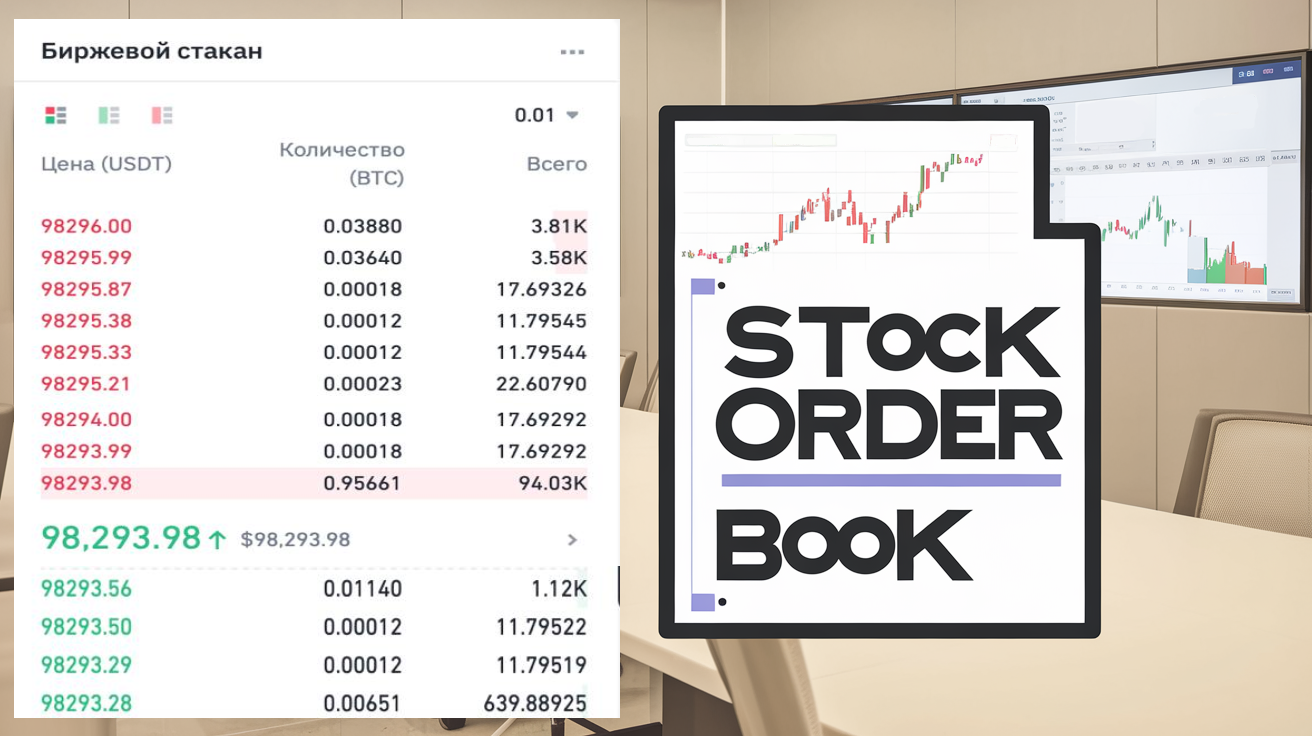
Levels show where, volume shows who. A big player cannot hide on the exchange; the tracks show up as spikes of volume. When I analyze Bitcoin, the first thing I look for are zones of very heavy trading. Large volume means an active presence of every participant at once. Then I compare that volume with how price moved. If volume is huge and price barely budged, an asset changed hands: someone large was building a position or, the other way, distributing it.
One practical point. I trade mostly futures and gold, and I read real Bitcoin volume on CME futures, not on crypto exchanges. On crypto exchanges the volume is often tick-based and easy to paint, while the CME gives real contract data. Large holders show up there too, including funds through spot ETFs, which have pulled in more than 55 billion dollars since their 2024 launch. How this looks on a live chart I show in a video on the Wyckoff method, with a separate hands-on breakdown: volume analysis applied to BTC.
In short: Read real Bitcoin volume on CME futures, not on crypto exchanges with painted (inflated) volume, and compare the volume spike with price reaction.
Bitcoin and the halving: how the cycle shapes the trend
Halving is the scheduled cut of the miner reward in half, which happens roughly every four years. The last halving was in April 2024: the block reward dropped from 6.25 to 3.125 Bitcoin. The next is expected around April 2028, when it falls to 1.5625. So the flow of new coins to the market keeps shrinking, until all 21 million are mined.
Historically the market has entered major rallies after a halving more than once, and many wait for the cycle to repeat. But I would be wary of treating it as a buy button. Past cycles are no guarantee for the future, and waiting for a move only because of a date on the calendar is dangerous. This is not advice to you personally, it is my position: I do not trade the halving itself as a signal. I read the trend that forms after it, by structure and volume, the same as in any other situation. That is the essence of the Wyckoff method: follow large capital, not the expectations of the crowd.
In short: The halving cuts issuance in half every four years, but it is not a growth button: trade the trend that forms after it, not the date on the calendar.
Frequently Asked Questions
Bitcoin is the first and largest cryptocurrency. Digital money with no bank and no state, with a hard cap of 21 million coins. Transfers go directly between people and are stored in a shared chain of blocks.
It was introduced in a 2008 white paper under the name Satoshi Nakamoto, and the network started in 2009. Whether that is one person or a group is still unknown, and the creator has stayed anonymous, which fits the idea of money that depends on code rather than on any single author.
A private key is the secret that signs your transactions and proves the coins are yours. Whoever holds it controls the bitcoin, so if you lose it the coins are gone for good, with no bank to recover them. Not your keys, not your coins.
I treat it like any other asset: key levels first, then volume. Levels show where the market turned, volume shows who stood behind it. News and hype I barely factor in.
I read volume on CME futures, not on crypto exchanges. On many crypto exchanges the volume is tick-based and easy to inflate, while CME gives real contract data, where large capital shows up too.
I do not trade the halving itself as a signal. Past cycles are no guarantee, and entering only because of a date on the calendar is trading blind. I work the trend and the volume that form after the event.
About the Author
Author: Igor Arapov — independent researcher in the psychology of investment decisions and behavioral finance, practising trader since 2013, founder of arapov.trade, author of a trading book series (ORCID: 0009-0003-0430-778X).