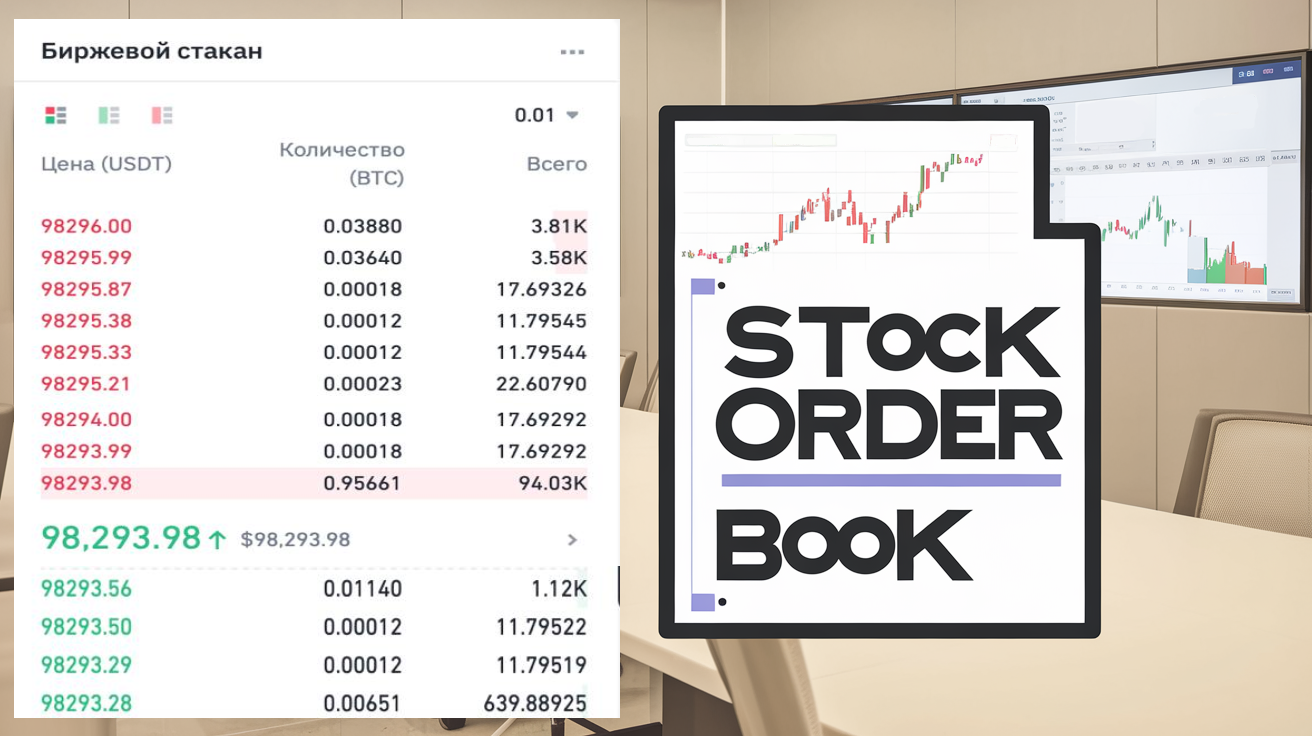
On this market the account is lost more often not because of an unlucky coin but because someone came in with too large a sum and no plan. Crypto stays the youngest and most nervous place there is, one a beginner lands in within ten minutes: drawdowns of tens of percent are routine here, empty coins are minted to be dumped, and a regulator's decision can swing the price in a single evening. It is sane to come here only with money whose loss will not wreck your life, and with a cold head.
Crypto is most often sold as a shortcut to money, and it is on exactly that promise that people zero out here. I treat it calmly and do not actively trade it myself: I am closer to futures on an exchange with clear regulation, where I feel like a protected participant. That is my personal reason, not an argument against you, since millions work in crypto every day. It is just that before you fund an account, it pays to see clearly what can go wrong and who profits from your haste.
In this article we'll cover:
- crypto risks split into five kinds, and the psychological one hits a beginner harder than the market itself;
- there is no fundamental floor under the price of crypto, so even Bitcoin has sagged 80 percent;
- every scam stands on one promise of easy, guaranteed money that does not exist;
- a dubious coin is doomed to delisting by its own mechanics, and you can see it coming.
First a walk across the general map of dangers, then a close look at each one.

What risks in crypto await a beginner
There are noticeably more dangers here than a person sees on the way in, and they are all quite different. The first is the wild swings of price, which we will return to separately. The second is deception: the market is packed with coins backed by nothing and schemes like a pump for a dump. The third is purely technical, since an exchange can be hacked, and once you lose the keys to your wallet, no one will return your funds, because the transfer is irreversible and there is no one to stand up for you. The fourth comes from states, whose single restriction decision drops the market within hours. And the fifth, the psychological one, mows down beginners more than all the rest combined.
To grasp where you have actually arrived, one comparison helps. When I started out, more than a decade ago, Forex hung on every banner: it was pushed from every direction and people were called there for fast money. Crypto today holds exactly that spot; the media and the news herd people here simply because everyone around is talking about it. Getting in could not be easier: a heap of exchanges, an account in ten minutes, coins bought from a phone, and formally even a schoolkid becomes a trader. That very accessibility is the trap. A person funds an account before figuring out what he is exchanging it for, catches the fear of missing out on emotion, and enters right at the highs, landing straight in the psychological risk. If you are only sizing up the market, start with the calm base of cryptocurrency from scratch, and only then bring an account here.
In short: There are five kinds of risk: price swings, deception, technical hacks with lost keys, state decisions, and psychology, and the very ease of entry shoves a beginner into the last and most dangerous of them.
Why Bitcoin drops 80% and what crypto volatility is
Volatility is the swing of price over a stretch of time, and in crypto it is monstrous. Even Bitcoin, the oldest asset in the sector, has folded 80 percent and deeper from its peaks in various years. And it is the leader here. Smaller coins in hard stretches sink far harder than the market and can well go to zero.
The reason is simple and unpleasant: crypto has no revenue, no payouts, and no firm floor beneath it. The price lives on demand and the mood of the crowd, and the mood flips in an instant. Bitcoin at least holds on a deflationary model: its issuance is capped, no more coins will physically be made than the ceiling allows, and in that it resembles digital gold, which is also ever costlier to mine. Under a typical scam coin there is exactly nothing; it is reprinted at a click and without limit. Add leverage to such swings, and the account burns in minutes, so guarding capital here is needed more than on any calm market. I myself act like this: I put at risk only a sum whose loss will not touch my life, and I keep the risk per trade small. For you that is not a prescription but a description of my way. A calm position-size calculation preserves an account far more often than a guessed ticker.
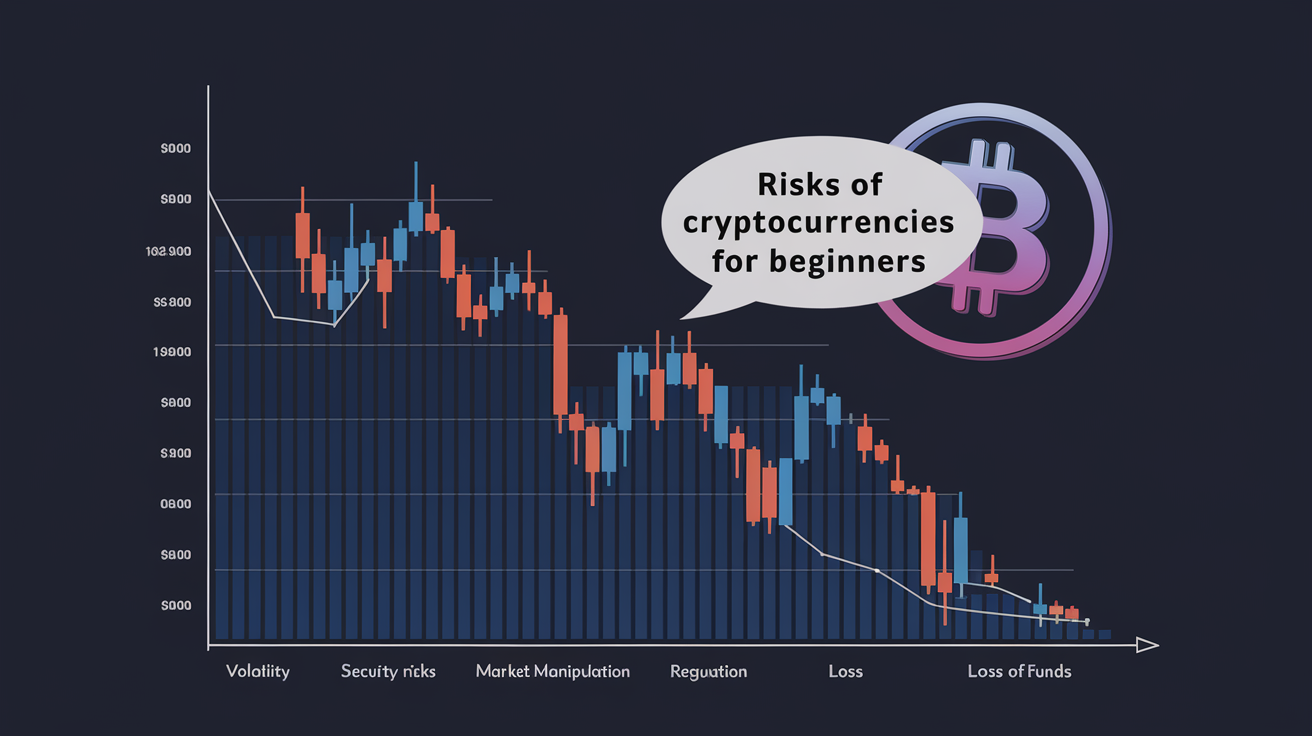
In short: Bitcoin folded 80 percent in crises and the small fry goes to zero, because crypto has no floor beneath it, and saved capital here is worth more than any lucky coin.
Crypto scams: the common types of fraud
A scam is fraud built to steal your money or access to your wallet. The kinds are plenty, but they are spotted at once, since they share one hook: the promise of easy and guaranteed income that does not exist on a live market. This often masks a "risk-free" earning on price differences between exchanges too: how crypto arbitrage actually works and why there is no easy money there, I cover separately.
An empty project raises money on a glossy site and a pretty roadmap, then dissolves. Phishing slips you a double of an exchange or a wallet to pull your credentials. A counterfeit exchange calmly accepts your deposit and paints a growing balance, but never lets you withdraw, endlessly demanding now verification, now a tax, now insurance, and the bet here is on psychology: seeing a painted profit, a person no longer wants to let it go and pays again and again for what never existed. The old classic is pyramids, where the first are paid with the money of the next, and the moment the inflow dries up the structure collapses. To this row belong the draining of all liquidity from a fresh token by the authors' own hands, fake giveaways supposedly from celebrities, and romance cons. In essence it is all about one thing: you are sold a pig in a false break, knowingly not what you expect to get. Exactly where a beginner's access is taken and how to prevent it I show separately in the material on safe crypto storage.
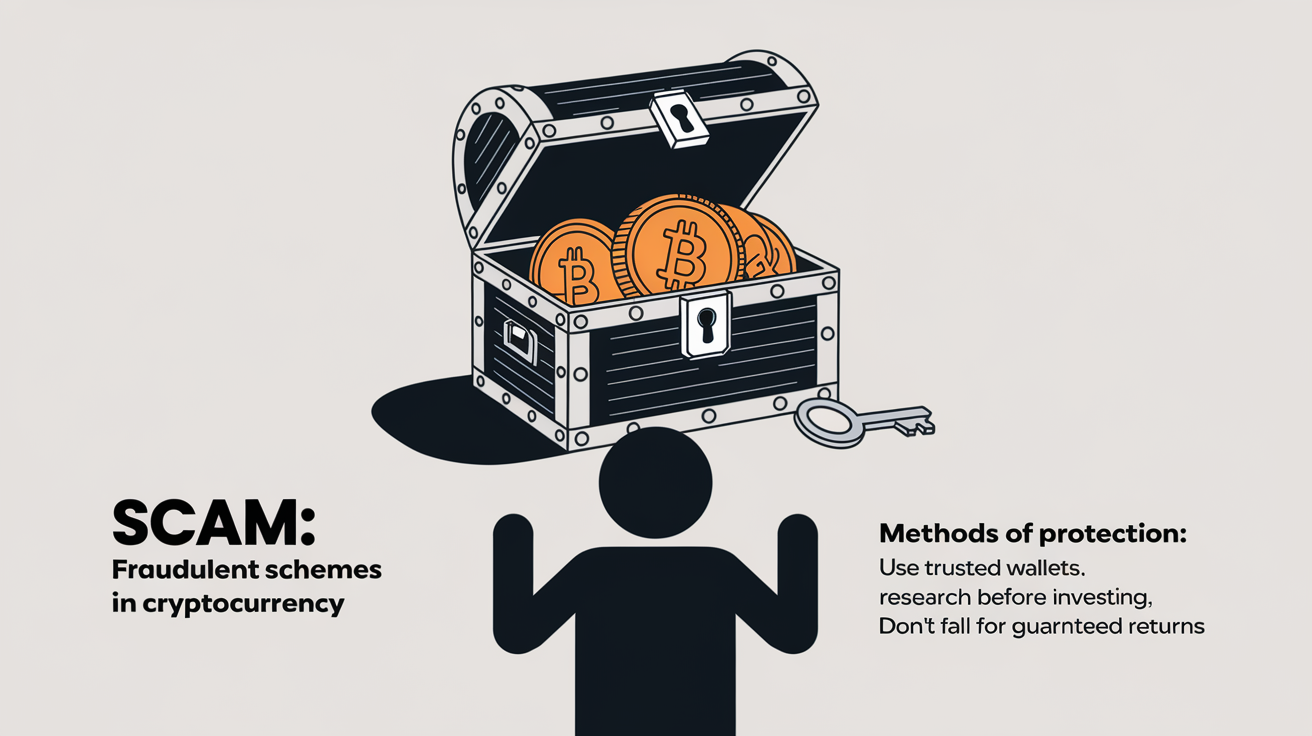
One modern scheme deserves its own mention, the wallet drain through a signature, which catches even the experienced. You are fed a bait site, a fake airdrop or a copy of a known service, and asked to connect your wallet and confirm an action. You think you are merely logging in or claiming a reward, while in fact you are signing an approval that hands a stranger's contract the right to move your tokens. Then a drainer takes everything in seconds, and it cannot be undone: on the blockchain a signature is final. The defence is simple: do not sign actions on unfamiliar sites, keep your main funds on a separate wallet, and revoke old approvals regularly. A signature in crypto is not a formality but the key to the safe.
A rug pull is when a token's creators hold its liquidity themselves and yank it out of the pool in one move, collapsing the price to zero; holders are left with a coin there is physically no one to sell to. It differs from an abandoned project by its mechanics: the money leaves not through a vanished website but through the smart contract itself, where the author often has a built-in way to mint more tokens or drain the pool. So with a fresh token the first thing I look at is not the promises but the liquidity: whether it is locked in the pool for an agreed term and how dispersed the large wallets are. If the bulk of the liquidity is controlled by a couple of addresses, this is not an investment but a trap with a known outcome for whoever arrives late.
In short: The schemes are many, empty projects, pyramids, phishing, counterfeit exchanges, but the hook is always one: if you were promised guaranteed profit, you are facing crooks.
Pump and dump: how a coin is pumped, dumped and delisted
A pump and dump is a scheme where the organizers first quietly accumulate a cheap, obscure coin, then sharply inflate it and dump it on the crowd. It is the same plot I keep harping on: a large player loaded up at the bottom and hands it off at the top to those who ran in last.
The script never changes. First a quiet accumulation down low. Then the pump: paid signals across chats, raptures from bloggers, faked volume posing as a frenzy. The crowd sees a candle to the ceiling and jumps in on bare fear of missing out, and at that very second the organizers unload. And then begins what is usually left unsaid. Such a coin can be printed endlessly, so supply is always greater than demand, and the price stays in the seller's hands. After the single thrust the turnover fades, since participants follow the price: while it rises, demand catches up, and the moment lower highs set in, everyone races to dump the goods, and the value crumbles as sharply as it climbed. When turnover drops below the threshold convenient for the venue, the coin is simply struck from the list. An exchange feeds on fees and will not keep a dead horse that stopped giving turnover. That is delisting, the quiet finale of nearly any hollow shell. Hoping the price will one day grow back is pointless: the coin gets delisted, and in its place new ones rise, such projects sprout like mushrooms after rain. The psychology of the crowd that all this rests on I cover in the course section on trading psychology. My own principle is short: I do not buy what has already flown up without a reason.
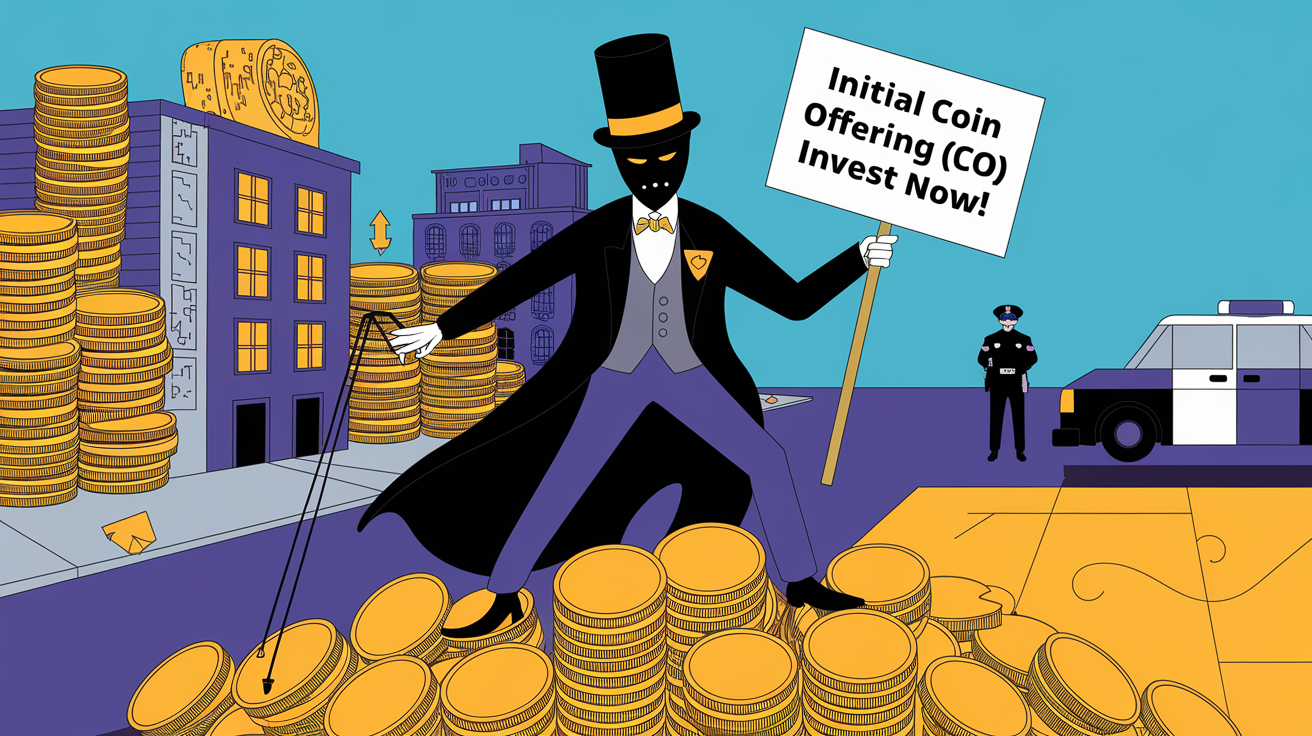
In short: Bought up low, inflated with ads, dumped on the crowd, then supply presses demand and turnover dies until the venue delists the coin, which is why I steer clear of anything that has already flown up.
How to spot a scam and lower your risk in advance
The good news is that almost any con can be read in advance, if you do not rush. The main beacon I have already named: the promise of guaranteed or fixed income. On a real market it does not happen, and whoever pledges it either does not understand the subject or is lying on purpose.
On down the list. Haste and pressure, when you are hurried and frightened with missed gains, left no time to think. A nameless team with no verifiable trace, and a vague description heavy on loud words and empty of specifics. A request to transfer coins first or to name your seed phrase, which a normal service never does in principle. And nagging promotion through media figures who were simply paid. Any one point alone is already enough to slow down, and a bundle of two or three is almost a verdict on the project. The regulatory risk stands apart, it cannot be foreseen, so I do not guess at the authorities' steps but build that uncertainty into position size and do without big leverage. My approach is plain: I check a project through outside sources, not through its own site, I do not believe pledges of income, and I stick to large, clear assets. I have traded a long time and have seen more than once that on a market of swings the survivor is not the one who guessed the coin but the one who lived through a run of losses without burning the account. The main danger of crypto sits not in the chart but in the head: the market itself is simply volatile, while what sinks a person is greed, haste, and the urge to win it back. These same signs of dubious coins I also show in the video on how not to lose money in crypto.
In short: A scam is given away by haste, a nameless team, and a request about keys; bake regulatory uncertainty into position size, and one rule clears nine traps out of ten: a guarantee of income equals fraud.
Frequently Asked Questions
Strong price swings, on which even Bitcoin folded 80 percent, while small coins go to zero. Add to that deception and empty coins, technical troubles like an exchange hack and lost keys, regulators' steps, and psychology. The last one, on greed and haste, takes out a beginner most often.
It is any con aimed at stealing your money or access to your wallet: empty projects, pyramids, phishing, counterfeit exchanges, pumping a coin for a dump. They are united by the lure of easy and guaranteed income, which simply does not exist on the market.
The organizers quietly gather a cheap, obscure coin, then drive it with signals and ads, posing a frenzy. The crowd enters on emotion, and right then the organizers dump their volume on the latecomers. The price falls as fast as it rose, and the crowd is left with a hollow shell.
Such a coin is printed without limit, so supply is always greater than demand and the seller holds the price. After the single thrust the turnover fades, and the moment it falls below the venue's convenient threshold, the coin is delisted. The venue lives on fees and does not keep an instrument that stopped giving turnover.
In my experience, enter only with money you are ready to lose, keep a small risk per trade, do not abuse leverage, and check a project through outside sources, not through its own site. Give no one your keys or seed phrase, and do not believe promises of income. Saved capital rescues you here more often than a lucky coin pick.
About the Author
Author: Igor Arapov — independent researcher in the psychology of investment decisions and behavioral finance, practising trader since 2013, founder of arapov.trade, author of a trading book series (ORCID: 0009-0003-0430-778X).