The pitch for Solana is always speed and cheap fees. For a trader that is secondary: SOL is a fast blockchain and one of the largest cryptocurrencies, but on the chart it is a high-volatility altcoin. I analyze it like any asset, by key levels and market structure, not by indicators. The quirk of SOL is that it moves sharper than bitcoin and reacts more strongly to the general appetite for risk, so position and stop here demand a separate discipline. By the same logic, by levels and structure, I also read another large altcoin, XRP on the Ripple network.
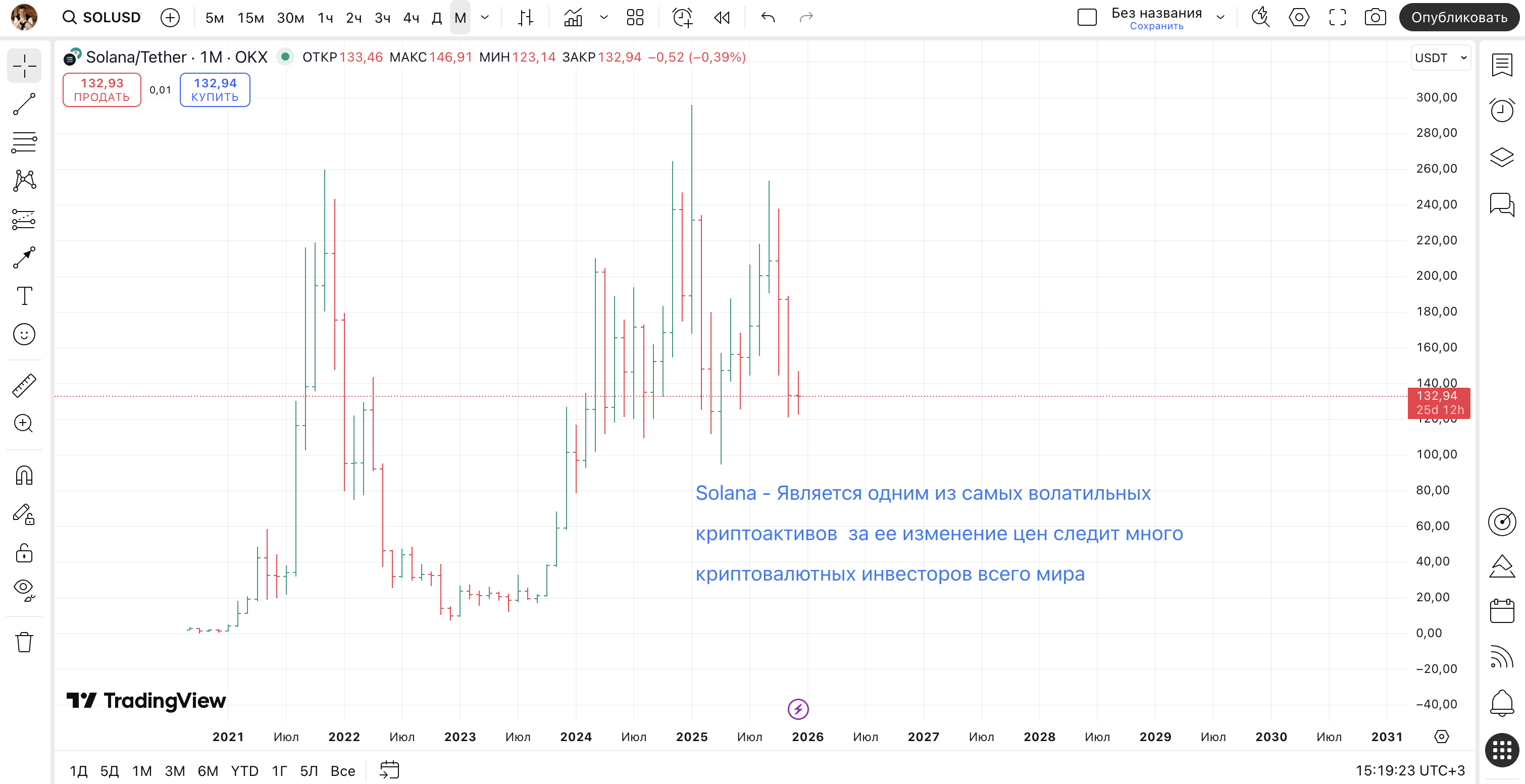
Solana is constantly near the top of crypto, and beginners often carry money into it on pure hype about speed and low fees. I have traded for years, and I treat such assets calmly: technology is technology, but on the chart SOL is just a very volatile instrument. As of early June 2026 it trades around 65 to 70 dollars, roughly three-quarters below its early-2025 peak. That alone shows how sharply it can move. Here is what kind of asset it is and how to approach it without illusions.
In this article we'll cover:
- Solana is a fast blockchain and a large altcoin, for a trader first of all a volatile asset;
- from Ethereum it differs by speed and low cost, but the price for that is questions about the network's reliability;
- SOL is the working token: it pays fees, secures the chain through staking, and has no hard supply cap;
- I suggest reading SOL by levels and market structure, and checking real volume on CME futures.
Start with what Solana is and how it differs from Ethereum.
What is Solana and how does it differ from Ethereum?
Solana is a high-speed blockchain and its token SOL, launched in 2020 by the team of Anatoly Yakovenko, a former Qualcomm engineer. The network can process thousands of operations per second with finality of about a fraction of a second.
The main difference from Ethereum is in the approach to speed. Solana chases high throughput and near-zero fees, which has drawn DeFi, NFTs, and memecoins to it. Ethereum is slower and pricier, but is considered more established and decentralized, and it makes up for speed through second-layer networks. So these are largely different bets: Solana bets on performance, Ethereum on reliability and ecosystem. Among notable events: since late 2025 spot ETFs on SOL have launched in the US, which opened institutions a simple access to the asset, and since March 2025 regulated derivatives on SOL have appeared on the CME exchange too.
In short: Solana is a fast blockchain with thousands of operations per second; a bet on speed and low cost against Ethereum's reliability, and for a trader it is first of all a volatile altcoin.
Under Solana's hood: Proof of History, speed, and the price for it
Solana's speed rests on a solution of its own. On top of the usual Proof of Stake consensus the network uses Proof of History (PoH): a cryptographic clock that stamps each transaction with a time in advance and lines them up in a strict order. Validators do not have to agree on the time first, so they process operations almost in parallel, and that is where the thousands of transactions per second (TPS) at a fee of a fraction of a cent come from. Speed gets a second push from how the network runs the work: an engine that executes many independent smart contracts at once instead of one after another, and a delivery scheme that hands transactions to the next validator early rather than parking them in a waiting room. It is exactly this cheap speed that drew DeFi, NFTs, and a wave of memecoins onto Solana.
But the performance is paid for in resilience. That same chase for throughput is also the cause of outages: under a sharp inflow of transactions the network has stalled for hours several times, especially in 2022, and each such halt hit the SOL price. The team is treating this with a new client, Firedancer, but as a trader I keep in mind that Solana's architectural plus (speed) and its main risk (failure under load) are two sides of the same coin. So for me SOL is a fast asset that demands respect, not a fail-proof piece of infrastructure.
In short: Solana's speed comes from Proof of History (a clock on top of Proof of Stake) plus parallel execution: thousands of TPS and fees of a fraction of a cent draw in DeFi and NFTs, but that same chase for speed is the cause of periodic network outages, and that is a direct risk to the SOL price.
What SOL is for: fees, staking, and supply
It is worth separating the network from its coin, because beginners often buy SOL without knowing what the token actually does. SOL is the working fuel of Solana. First, it pays the fees: every transaction and every interaction with an application costs a tiny amount of SOL, and because fees are so low, a small balance covers a great many actions. Second, SOL secures the network through staking: you lock your coins with a validator that processes transactions, and in return you earn a reward. Holders who do not run a validator themselves can delegate their stake to one and still receive a share.
Now the part that matters for a trader. That staking reward is not a gift, it is paid out of new issuance, and Solana, unlike bitcoin, has no hard cap on supply. Issuance started high and is set to decline year by year toward a low long-term rate, and in 2026 it runs at roughly four percent a year, all of it going to those who stake. So three sober points follow. The yield is funded by inflation, not by thin air. Staked SOL is locked and carries the risk of the validator you chose. And a coin with no fixed ceiling dilutes differently than a capped one. None of this makes SOL good or bad, but it should be priced in before the word "yield" does the thinking for you.
In short: SOL pays fees and secures the chain through staking, but the staking reward comes from inflation, the coin is locked while staked, and SOL has no hard supply cap, so the yield is a trade-off, not free money.
Technical analysis of SOL: levels and market structure
I invent no special magic for SOL, I read it with the same eyes as a futures contract or gold. First the market structure: where the trend is, where the flat is, where the price keeps hitting the same level. A support level is a price the market has already turned up from, resistance is the opposite. For volatile altcoins, round psychological marks like 50, 100, 200 dollars work well too, because many orders crowd there. I build the decision not on indicators, which here only repaint and lag, but on the levels themselves and the price's reaction to them.
Separately about volume, since it is my main tool. In crypto it has a known trouble: on unregulated exchanges it is easy to fake. So I check the real volume on SOL where the data is honest, on CME futures, since such contracts appeared in March 2025. This is not advice for you personally, it is how I act. More on crypto trading itself there is a separate piece, and how to build the priority-change levels is covered in the course.
In short: I read SOL by levels and structure, not by indicators; round marks 50, 100, 200 hold orders, and I check real volume only on CME futures, where it can't be faked.
Risks of trading Solana: volatility and liquidity
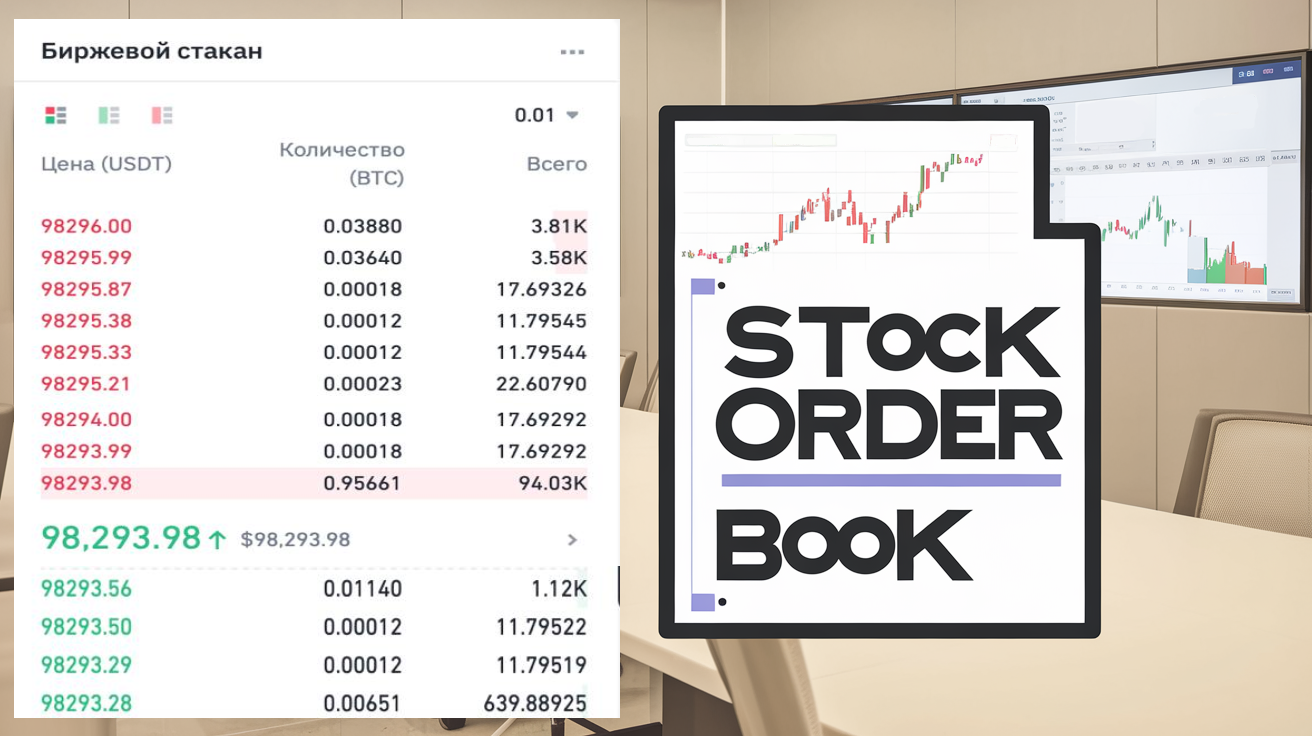
Here it is important to soberly understand what you are getting into. SOL is a so-called high-beta asset: on a rising market it often outpaces bitcoin, but on a falling one it drops harder. Daily moves of 5 to 15 percent are routine for it, and on some days even thirty. So I hold a position in SOL noticeably smaller than in calm instruments, and I lay in a wider stop, otherwise any of its ordinary jolts would knock me out by chance.
The second risk is the reliability of the network itself. Solana had a series of major outages, when the blockchain stalled for hours, especially in 2022. The team has worked a lot on this since, including through the new Firedancer client, but the lingering doubt and the risk of a repeat remain, and each new outage hits the price. The third point is liquidity: on calm days there is enough of it, but in moments of panic the order book is thin, and the price jumps levels in lurches. Putting it all together, the conclusion is simple: SOL is a normal trading asset, but one that demands respect for risk, not a casino for betting on hype. You can compare it with other networks in the piece on alternative blockchains, and how to size a position to your risk is covered in the course section on position sizing.
In short: SOL is a high-beta asset: daily moves of 5 to 15 percent are normal for it, so I hold a smaller position and a wider stop, plus I remember the network outages and the thin liquidity in a panic.
Frequently Asked Questions
It is a fast blockchain and its token SOL, launched in 2020. The network bets on high speed and cheap fees, so there are many DeFi applications, NFTs, and memecoins on it. For a trader SOL is a large but very volatile asset.
Solana is faster and cheaper in fees, but there are questions about its network's reliability because of past outages. Ethereum is slower and pricier, but is considered more established and decentralized. These are different bets: performance against reliability.
SOL pays the network's fees and is used for staking, where you lock it with a validator to help secure the network and earn a reward. The reward comes from new issuance, so it is not free money: you lock the coin, you carry validator risk, and unlike bitcoin SOL has no hard supply cap.
I read it by market structure and key levels, not by indicators. Round psychological marks work well. I check the real volume on CME futures, because the volume of unregulated crypto exchanges can't be trusted.
High volatility: SOL drops harder than the market on a fall. Plus a history of network outages and thin liquidity in moments of panic. So it is worth holding a small position and laying in risk in advance, not climbing in on hype.
It is Solana's cryptographic clock: a mechanism that stamps transactions with a time and lines them up in order in advance, before validators reach consensus. On top of Proof of Stake it lets the network process thousands of transactions per second at a very low fee. The flip side of this chase for speed is load-driven outages that have stalled the network several times.
About the Author
Author: Igor Arapov — independent researcher in the psychology of investment decisions and behavioral finance, practising trader since 2013, founder of arapov.trade, author of a trading book series (ORCID: 0009-0003-0430-778X).