How does an exchange work? How do you read charts and trading volume? What does ATR show? How does spot trading differ from futures? How do you calculate risk and position size? This section brings together the topics explained in the ArapovTrade library.
Choose the topic that interests you. The topic pages combine short questions and answers with links to detailed articles. This lets you first understand the core idea, then explore definitions, examples and practical applications. Selected questions also include video explanations by Igor Arapov.
Getting Started and Trading Systems
How to move from basic concepts to practice: choose a platform and a broker, understand different approaches to trading and establish the rules of your system.
Topics covered: Trading and investing, long and short positions, education, platforms, brokers, trading styles, prop trading, copy trading, AI in trading and testing a trading system.
Example questions:
- What is trading in simple terms?
- What is a trading terminal, and why do you need one?
- What are the main trading styles based on holding time?
- What is a trading system?
- What are prop trading and prop firms?
Trading Risk and Psychology
How to limit losses, calculate position size and follow trading rules under emotional pressure.
Topics covered: Risk management, position sizing, stop-loss and take-profit orders, expected value, losing streaks, averaging, martingale, fear, greed and discipline.
Example questions:
- How does risk management differ from money management?
- What does managing an open position involve?
- How does averaging change the average entry price of a position?
- Why is psychology important for following a trading system?
Charts and Technical Analysis
How to read price movements, identify levels and assess candlestick formations and chart patterns.
Topics covered: Timeframes, trends and ranges, support and resistance, channels, breakouts and retests, Japanese candlesticks, pin bars, chart patterns, Elliott waves and Fibonacci levels.
Example questions:
- What does technical market analysis study?
- What counts as a breakout of a price level?
- Which four prices does a Japanese candlestick show?
- What is a price pattern?
- What do Fibonacci retracement levels show?
Indicators and Volatility
What indicators measure, how to interpret their signals and why those signals should be considered in their market context.
Topics covered: ATR, ADX, RSI, MACD, the stochastic oscillator, moving averages, VWAP, Bollinger Bands and the Ichimoku Cloud.
Example questions:
- What does ATR measure?
- Does ADX show the direction of a trend?
- What is RSI?
- How is MACD constructed?
- What is VWAP?
How Financial Markets Work
How participants and orders interact, how financial instruments differ and how economic events relate to markets.
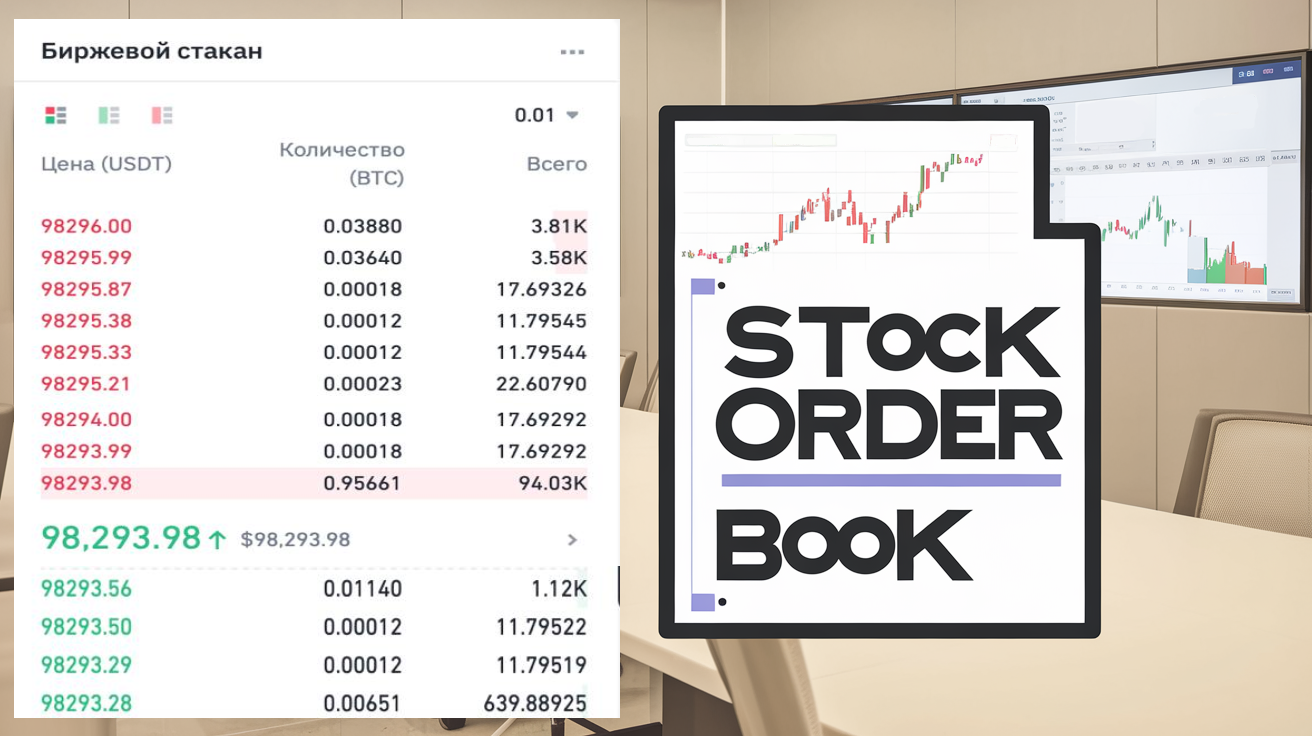
Topics covered: Exchanges, brokers and market makers, the order book, bid and ask, spreads, order types, Forex, leverage, trading sessions, news, futures, options, stocks and bonds.
Example questions:
- How does an exchange organize trading, and what role does a broker play?
- How do market, limit and stop orders differ?
- What is Forex, and why are currencies traded in pairs?
- What is a derivative?
- How does a bond differ from a stock?
Volume Analysis, Wyckoff and Smart Money
How to compare price and volume, study market phases and examine liquidity structure.
Topics covered: Exchange volume and tick volume, Volume Profile, Market Profile, accumulation and distribution, Spring, Upthrust, effort and result, Smart Money, liquidity pools, Order Blocks and FVGs.
Example questions:
- What does volume analysis study?
- Which laws is the Wyckoff method based on?
- What is a liquidity pool in SMC terminology?
- What is called an order block in SMC?
- How does an imbalance differ from a Fair Value Gap?
Questions and answers: volume analysis, Wyckoff and Smart Money
Cryptocurrency Mechanics and Security
How crypto instruments and services work, where to store assets and which risks to consider.
Topics covered: Wallets, keys and seed phrases, stablecoins, USDT, USDC and DAI, DeFi, staking, tokenomics, perpetual futures, funding rates, arbitrage, memecoins and scams.
Example questions:
- What is cryptocurrency in simple terms?
- How does a hot wallet differ from a cold wallet?
- How does a stablecoin maintain its currency peg?
- What is DeFi?
- What are the main risks of cryptocurrencies?
Questions and answers: cryptocurrency mechanics and security
Bitcoin, Altcoins and Market Cycles
Which features of individual cryptocurrencies and market metrics the library explores.
Topics covered: Bitcoin, halving, Bitcoin ETFs, Ethereum, Solana, XRP, Bitcoin dominance, the ETH/BTC ratio, altseason, token supply and market cycles.
Example questions:
- Which Bitcoin properties are important for understanding its market?
- What is Bitcoin halving, and how often does it happen?
- What is a Bitcoin ETF?
- How does Ethereum differ from Bitcoin?
- What is Bitcoin dominance?
How to Use This Section
- Choose a topic or find a familiar term in the section description.
- On the topic page, open a question and read the short answer.
- Follow the link to the detailed article to explore explanations and examples.
- If an answer includes a video explanation, use the link to the corresponding lesson chapter.
The topics are connected: understanding orders helps explain liquidity, price analysis is complemented by volume, and a trading system combines entry, exit and risk-control rules. When studying a question, it is useful to explore related library materials.
About the Library Materials
This section is based on the ArapovTrade library and Igor Arapov's educational videos. It includes definitions, comparisons of instruments, explanations of market mechanics and discussions of the author's approach to trading.
The author of the library is Igor Arapov, a practising trader since 2013. Detailed materials explain the context of each question; short answers provide a starting point for exploring the topic.