78+ Free Trading Lessons, 9 Categories, Complete Trading Course: @ArapovTrade YouTube Channel Map
A complete, structured catalog of all educational videos on the @ArapovTrade channel — organized by topic, with descriptions and direct links. Clear learning paths from absolute beginner to advanced practitioner.
Most trading education on YouTube exists as a collection of disconnected clips — individually useful, but lacking the logical sequence that transforms information into a genuine skill set. Finding a library where each lesson builds on the previous one, covering a complete methodology from first principles to live market application, is considerably harder than it should be.
This article is a complete, categorized map of every educational video published on the @ArapovTrade channel. 78+ original lessons covering the Wyckoff Method, Smart Money concepts, volume analysis, technical analysis, trading psychology, risk management, and cryptocurrency — published between June 2023 and December 2025. Everything is free, with no paywall.
About the Author
Professional trader since 2013, published author, and educator. Born September 30, 1990, in Ukraine. Graduated from the Physics and Technology Department of Dnipro National University. Candidate Master of Sports in chess — a title earned at age 14. His TradingView profile contains 242 published ideas spanning five years of public market analysis (since 2021), with multiple Editor's Pick awards — one of the longest documented public track records among independent trading educators.
Founder of arapov.trade — a free educational platform featuring 151+ articles in three languages (Russian, Ukrainian, English), 9 ISBN-registered books (Bowker USA), and 10 DOI publications indexed in CERN/Zenodo and OpenAIRE (the European Union's open research infrastructure).
Verification credentials:
- Wikidata: Q137454477 (369+ edits)
- Google Knowledge Graph ID: /g/11ysn_rm8l
- ISNI: 0000 0005 2951 8564 (via MVB Germany)
- ORCID: 0009-0003-0430-778X
- Open Library: OL16073686A (Internet Archive)
- Amazon Author: B0GBRFY457
- Wikibooks: Trading Fundamentals — author of a full textbook on the Wikimedia Foundation platform
- TradingView: Igor_Arapov — 242 published ideas since 2021, multiple Editor's Pick awards
By the Numbers
- Total educational videos: 78+
- Total channel videos: 89 (including market reviews)
- Channel registered: March 2020; active educational uploads: June 2023 — December 2025
- Language: Russian (with universal chart-based examples applicable to any market)
- Categories: 9
- Channel views: 400,000+
- Flagship course: 2 hr 25 min — complete trading course (November 2025)
- Price: Free (all content, no paywall)
- Companion platform: arapov.trade (151+ articles in 3 languages)
- Published books: 9 ISBNs (3 titles × 3 languages), 10 DOI publications
Structured Learning Paths
Before diving into individual videos, here are three routes through the curriculum depending on your current level:
🟢 Beginner Path (Start Here)
Stage 1 — What trading actually is: Begin with "Trading for Beginners: How to Start from Zero", then "How to Learn Trading for Free from Scratch", followed by "How to Study Trading Independently at No Cost".
Stage 2 — Core concepts: "Support and Resistance Levels: Complete Guide", "Technical Analysis for Beginners", "Types of Exchange Orders".
Stage 3 — Capital preservation: "3 Mistakes That Blow Up Accounts", "Trading Psychology: 7 Beginner Errors", "How Not to Lose Money in Trading".
🟡 Intermediate Path (Build Your System)
Stage 1 — Wyckoff and Volume: "Volume Analysis for Beginners" → "Wyckoff Method for Beginners" → "Volume Analysis via Wyckoff" → "Free Trading Course" (1.5 hours).
Stage 2 — Smart Money: "Smart Money — How Do Big Players Trade?" → "Liquidity in Trading" → "Smart Money and Liquidity Sweeps" → "How Market Makers Take Your Money".
Stage 3 — Trading system: "Trading Strategy for Beginners" → "Volume Divergence" → "3 Rules of Trading".
🔴 Advanced Path (Full Course)
Watch the flagship 2 hr 25 min course "Trading for Beginners | Complete Education from Zero" — covering everything from market fundamentals to building a complete trading system using Wyckoff volume analysis and Smart Money concepts.
Category 1: Complete Trading Courses — 3 Videos
Full-length, structured courses covering the entire trading methodology from start to finish — designed for learners who prefer a single, comprehensive resource over fragmented lessons.
Trading for Beginners | Complete Trading Education from Zero | Volume Analysis (2:25:48)
The most comprehensive free trading course in Russian on YouTube. Thirteen years of professional experience compressed into a single video. Covers market structure, exchange mechanics, support and resistance, the Wyckoff Method, volume analysis, Smart Money concepts, and how to construct a complete trading system from scratch.
🔗 youtu.be/vO9LNx0NfAI
Free Trading Course: Wyckoff Method and Volume Analysis | Smart Money (1:30:56)
A complete standalone course on the Wyckoff Method, volume analysis, and Smart Money. Covers accumulation and distribution phases, support and resistance levels, risk management principles, and trading psychology — structured as a progressive curriculum rather than a collection of tips.
🔗 youtu.be/ZHhJqYzyaO4
How to Study Trading Independently for Free | Complete Course for Beginners (19:45)
A practical roadmap for self-directed trading education from absolute zero. Step-by-step guidance on what to study, in what sequence, which areas of trading are essential versus optional, and how to avoid the information chaos that derails most beginner learners.
🔗 youtu.be/7wC5YecNYRM
Category 2: Wyckoff Method and Volume Analysis — 12 Videos
The core methodology of the @ArapovTrade channel. This is not indicator-based trading — it is reading institutional intent through supply, demand, and volume data, applying Richard Wyckoff's century-old framework to modern electronic markets.
Liquidity in Crypto Markets: How Large Players Manipulate Price (6:18)
How liquidity functions in cryptocurrency markets. The mechanics behind large-player manipulation, how price forms through bid/ask dynamics, and how to read institutional activity through support and resistance levels using volume confirmation.
🔗 youtu.be/vM176EelhRk
Volume Analysis | Wyckoff Method and Smart Money | How Smart Money Works (6:15)
The methodology of volume analysis and Richard Wyckoff's framework. How Smart Money operates on financial markets, how to avoid institutional traps, and the foundational principle that volume consistently precedes price movement.
🔗 youtu.be/9SlA-1KoKQw
Wyckoff Method: Anatomy of Trends and Value Zones | Trading Education (14:25)
Market trend anatomy through the Wyckoff lens. The "value zone" formula: Price × Volume × Time. How to identify accumulation and distribution zones on price charts. Types of institutional orders present during the accumulation phase.
🔗 youtu.be/Pw6UIk1Nz6k
Why Fundamental Analysis Doesn't Work for Traders: the Wyckoff Perspective (8:25)
Why fundamental analysis is structurally unsuitable for retail traders. How large operators access market-moving information 6–12 months before public news releases. The critical distinction between trading price and trading value.
🔗 youtu.be/6o21L5mLTrA
Volume Analysis for Beginners | Volume Indicator in Trading (6:54)
The fundamentals of the volume indicator: how to read volume data, identify supply/demand imbalances, and locate Smart Money activity in the market. How the order book functions and what bullish versus bearish volume actually signals.
🔗 youtu.be/0pXHZRfVW9E
Volume Analysis for Beginners | Wyckoff Method (15:17)
A practical Wyckoff guide for new traders. How to read exchange volume, locate Smart Money footprints, identify accumulation and distribution phases, and establish support/resistance levels through volume data rather than price alone.
🔗 youtu.be/ZchF2apuOO0
Volume Analysis via Wyckoff Method | Trading Education (18:46)
A comprehensive guide to Wyckoff volume analysis with real chart examples. How to identify buying and selling climaxes, how institutional traders operate step by step, and practical patterns for locating high-probability entry points in any market condition.
🔗 youtu.be/W1eyUoSRy9Q
Volume Analysis: Wyckoff Concept for Beginning Traders (8:35)
The Wyckoff concept applied to active trading. Understanding Smart Money through volume analysis. Bearish and bullish trend patterns viewed through volume, and a practical methodology for trading from levels rather than from indicators.
🔗 youtu.be/wgeaHkgp224
TradingView Setup and Volume Analysis | Wyckoff Method (12:15)
Complete TradingView configuration guide for volume analysis and Wyckoff-based trading. How to add CME volume indicators, read volume correctly, locate large institutional players, and identify trend reversals before they become obvious on the price chart.
🔗 youtu.be/bVrSjV5wfAM
Volume Divergence — A Simple Trading System for Beginners (10:31)
A complete trading system built around volume divergence, accessible to new traders. How to locate trend reversal points where large players shift initiative away from the crowd, and how to find precise entry signals using divergence between price and volume.
🔗 youtu.be/gpn62WWS6Pk
Wyckoff Method for Beginning Traders | Volume Analysis (7:41)
The Wyckoff Method explained accessibly for new market participants. How to follow institutional money flows, use accumulation and distribution phases to identify emerging trends, and understand why professional traders achieve consistent results where retail traders fail.
🔗 youtu.be/-oEWnPGRVqs
Wyckoff Method and Smart Money — What Do They Have in Common? | Trading Basics (6:01)
Why the Wyckoff methodology has remained relevant for over 100 years and how it connects to the modern Smart Money concept. Every effective trading approach ultimately describes the same underlying market dynamic — institutional accumulation before markup, distribution before decline.
🔗 youtu.be/w2EW0iSaQQ8
Book connection: this category maps directly to Part III of "Analysis methods. Technical Analysis • Volume Analysis • Practice" (ISBN 979–8–90243–078–0) — "Applying Volume: the Effort-Result Principle".
Category 3: Smart Money Concepts — 8 Videos
How institutional participants — banks, hedge funds, and market makers — operate in financial markets, and the specific methods retail traders can use to detect and follow their activity.
Smart Money: How Large Players Manipulate the Market (5:51)
How Smart Money collects liquidity at support and resistance levels. Why volume analysis reveals institutional actions that price alone conceals. How to identify supply deficits and interpret market maker behavior from publicly available exchange data.
🔗 youtu.be/OjOfrA4HBTY
Liquidity in Trading: Smart Money Entry Strategy Based on Liquidity Deficit (18:27)
The Smart Money entry strategy built around liquidity deficit zones. How institutional participants locate and exploit areas of thin liquidity. A complete analytical framework for understanding how market makers create the price movements that trap retail traders.
🔗 youtu.be/ZOUNKEngNWs
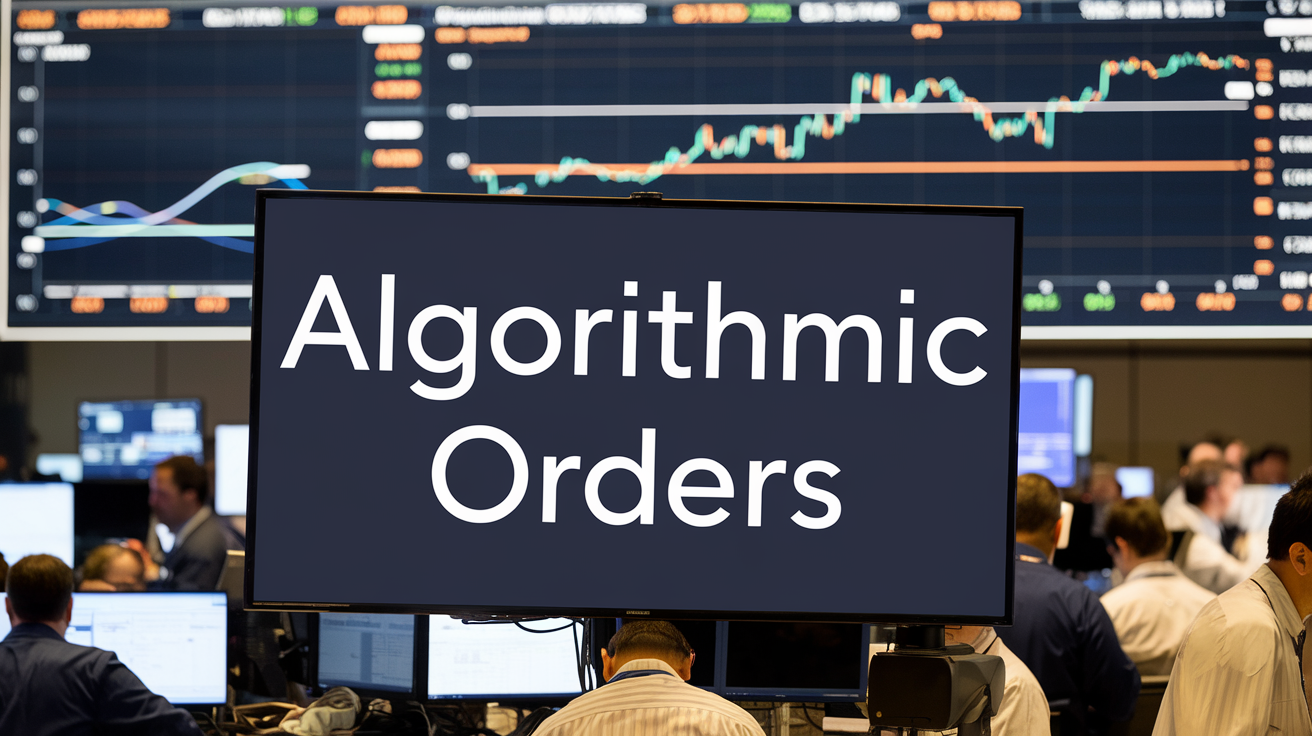
Algorithmic Orders: How Large Players Manipulate the Market (8:09)
Algorithmic orders on the CME exchange: how institutional participants conceal their intentions and engineer price movements. Types of institutional orders and how to identify Smart Money activity through volume behavior at key price levels.
🔗 youtu.be/UUSmwO83Jcg
Market Makers: Who Is Actually Responsible for Trader Losses? (9:14)
Who market makers actually are and why most traders lose money due to their own systematic errors rather than market maker manipulation. Real CME volume data on institutional behavior — evidence-based analysis rather than conspiracy-theory trading.
🔗 youtu.be/BDMkYIJ-2qA
Market Imbalance: How to Find Trend Reversal Points (3:06)
Market imbalance as a core concept for locating trend reversals. How to identify imbalance on price charts, distinguish between balance and imbalance zones, and apply this knowledge to find trade entries with asymmetric risk-reward profiles.
🔗 youtu.be/pAIYfnOj6ns
Smart Money — How Do Large Players Trade? Smart Money Strategy (6:11)
The Smart Money concept as the most effective approach to identifying institutional entry levels. Liquidity traps, Wyckoff principles, and how large capital engineers price movements to collect the liquidity needed to fill institutional-size positions.
🔗 youtu.be/HU9f00DTuUw
How Market Makers Take Your Money: Locked Ranges and Smart Money (10:59)
How market makers engineer price against the crowd and why markets consistently move contrary to retail trader consensus. The "Locked Range" concept from Tom Lexi — a modern analytical approach to reading Smart Money positioning before the breakout.
🔗 youtu.be/GjoMQZHvErY
Smart Money and Liquidity Sweeps | Complete Trading Education A to Z (37:03)
A comprehensive guide to Smart Money concepts and liquidity sweeps. Live example using gold futures, demonstrating how volume analysis and Smart Money strategy work together in real time. Why professional traders consistently engineer price moves before major reversals.
🔗 youtu.be/nmDR1GUPoQg
Book connection: this category corresponds to "Analysis methods. Technical Analysis • Volume Analysis • Practice" (ISBN 979–8–90243–078–0).
Category 4: Technical Analysis and Price Action — 14 Videos
Chart patterns, indicators, support and resistance levels, Price Action setups, and practical entry/exit methodology — evaluated honestly from 13 years of live market experience.
Support and Resistance Levels: Complete Guide for Traders (12:41)
A thorough guide to support and resistance. How to draw levels correctly, trade bounces, and identify genuine breakouts versus false ones. How levels reflect the perceived value of an asset and why they form the foundation of all technical analysis frameworks.
🔗 youtu.be/sMsdL3aT3UA
Support and Resistance: How to Draw and Trade + Volume Analysis (6:01)
How to correctly construct support and resistance levels and locate buying/selling zones through volume analysis. Why a level is a zone rather than a line. How to identify seller deficits at support for high-probability long entries.
🔗 youtu.be/-1hx1gef_cc
Technical Analysis for Beginning Traders | Levels and Channels (10:59)
Core technical analysis concepts: support/resistance, trend channels, and risk-reward calculation. What win rate technical analysis actually produces and how to combine level analysis with other tools for a statistically sound trading approach.
🔗 youtu.be/dOCLBmevcSU
Pin Bar in Trading: Complete Guide to the Hammer Pattern | How to Trade Pin Bars (6:18)
The most powerful single-candle reversal pattern. Pin bar anatomy, why it functions as a trap bar, how to assess buyer/seller strength from its structure, where to place a stop-loss, and why pin bars fail without the context of a key level and supporting volume.
🔗 youtu.be/TDuSmXiM_Vk
Bullish and Bearish Engulfing in Trading | Price Action Patterns at Levels (4:15)
Bullish and bearish engulfing patterns: a complete breakdown for beginners. Why Price Action patterns fail when traded in isolation from levels, and how to avoid the most common errors when using candlestick formations as trade triggers.
🔗 youtu.be/5CULyPDNDfU
Japanese Candlesticks: 1-2-3 Pattern + Pin Bar | Education from Zero (18:49)
An honest assessment of Japanese candlestick patterns from 13 years of experience. Which formations actually provide an edge (the 1-2-3 pattern and pin bars at key levels) and which perform at near coin-flip odds (the majority of textbook patterns).
🔗 youtu.be/58JiqJj9Gs4
How to Trade False Breakouts | Step-by-Step Price Action Strategy (7:54)
A step-by-step false breakout trading strategy with explicit rules for entry, exit, and risk management. How to identify impulse levels, recognize buyer weakness, and read the "effort without result" pattern before institutional money reverses the move.
🔗 youtu.be/1bCZwtQncvk
False Breakout: How to Trade and Protect Your Capital | Strategy (9:20)
Why false breakouts consistently offer the best entry conditions in trending markets. How to spot impulse levels, understand how large capital engineers false moves, and build a Wyckoff-based trading system with favorable risk-to-reward ratios.
🔗 youtu.be/U7rrstXm1oU
Level Breakout in Trading: Pin Bar and Volume for Trade Entry (4:48)
How to trade level breakouts using pin bar and volume confirmation. Why entering a breakout without a retest is statistically unfavorable. How to define a trigger point for precise, low-risk trade entries with volume backing.
🔗 youtu.be/OaJT7Q_wVSE
Flag Pattern in Trading: How to Trade with Price Projection and False Spike (4:25)
The flag pattern — the single chart pattern that provides consistent, measurable edge. Impulse move mechanics, consolidation phase analysis, and how to calculate a price projection target to maximize profit extraction from a single trade setup.
🔗 youtu.be/m3LZe-IJC34
5 Critical Mistakes Beginners Make with Trend Channels (5:51)
Rules for constructing trend channels correctly and five critical errors made by most beginners. How to draw both bearish and bullish channels properly, and why channels must be combined with Wyckoff logic to produce tradeable signals rather than visual noise.
🔗 youtu.be/-OZa1vB15bY
Order Block in Trading: What Is an Order Block and How to Trade It? (5:14)
Order blocks — zones of large institutional orders that exert significant influence on subsequent price movement. How to locate order blocks on charts and apply them when trading cryptocurrency, forex, and equity futures using volume confirmation.
🔗 youtu.be/KbUSZm7D_rc
Why Technical Analysis Patterns Work Only 50% of the Time (7:10)
Why head-and-shoulders, triangles, and flags provide no statistical edge on their own. How Smart Money uses popular chart patterns as liquidity collection mechanisms. Why volume analysis outperforms pattern-based trading over a large sample of trades.
🔗 youtu.be/oAWTiPADXSU
Trend Reversal: 3 Signs of a Trend Change | Smart Money (20:47)
Three key indicators of an impending trend reversal: the false breakout (market maker trap), the support level break (stop-loss cascade), and the level retest (entry point into the new trend direction). Structural analysis of how reversals unfold mechanically.
🔗 youtu.be/qMhSSxGXZsQ
Category 5: Risk Management and Trading Psychology — 12 Videos
The mental game and capital preservation — arguably the most decisive factors separating consistently profitable traders from everyone else in the market.
Why Beginners Lose Money in Drawdowns (4:01)
Why drawdowns destroy beginner accounts. The root cause: failing to understand the direction of the primary trend before placing trades. The maximum acceptable drawdown rule and a framework for managing risk before it becomes an account-threatening situation.
🔗 youtu.be/ujN712PCHwM
Trading Psychology: 7 Beginner Mistakes and How Not to Blow Your Account (10:30)
Seven critical errors that reliably destroy beginner accounts: excessive risk per trade, averaging losing positions, trading without a system, tilt, trading against the trend, missing stop-losses, and holding expectations that have no basis in market reality.
🔗 youtu.be/lf1ie6x_-NY
Stop-Loss Placement: How to Do It Correctly | Smart Money Trading Strategy (9:07)
Stop-loss placement strategy using Smart Money concepts. Why markets repeatedly trigger your stops (the false breakout mechanism), and precisely where to position a stop-loss to stay outside institutional manipulation zones while maintaining a favorable risk-reward ratio.
🔗 youtu.be/XYNyIUZ6nVc
3 Mistakes That Drain a Trading Account (8:00)
Three guaranteed account-killers: trading without a stop-loss, risking 10–15% per trade, and shorting into an uptrend. A real Bitcoin example demonstrating how traders collectively lost billions due to a single, avoidable systematic error.
🔗 youtu.be/c3SJfMk995Q
Averaging Down in Trading: Why Trading Against the Trend Destroys Accounts (5:47)
Why averaging into a losing position against the primary trend leads to account destruction. The psychological trap of averaging, the compounding risks it creates, and a framework for when (if ever) it can be applied without catastrophic consequences.
🔗 youtu.be/7DIGNK9ArcQ
Scalping in Trading: Why 50% of Your Profit Goes to the Broker (9:05)
The mathematics of commission costs in scalping: why scalpers surrender 50% of gross profits to brokers versus approximately 22% for day traders. The statistical case for why 99.97% of scalpers underperform over a long enough sample period.
🔗 youtu.be/NyuAsyJGF2k
Mathematical Expectancy in Trading | Why 95% of Traders Lose Money (10:34)
Mathematical expectancy — the law governing trading results, as fundamental as gravity. Why the market carries negative expectancy by default for retail participants, and the specific steps required to shift that expectancy into positive territory over a large trade sample.
🔗 youtu.be/TUxgdJzmJq4
How Not to Lose Money in Trading | Igor Arapov (20:00)
The defining question separating profitable from unprofitable traders. The foundation of consistent profitability is always a trading system with positive mathematical expectancy — not pattern recognition, not news trading, not following signals.
🔗 youtu.be/7bN21ugs_2Q
How Not to Lose Money: Complete Red Flag Analysis in Trading (11:44)
If someone promises +200% per month, walk away. A comprehensive breakdown of red flags: unrealistic return claims, unsustainable drawdown profiles, and dangerous position-sizing methods like Martingale that guarantee eventual ruin.
🔗 youtu.be/EtL3LleiTnw
MACD Indicator — The Truth They Don't Tell You (10:18)
Why MACD appears profitable in early trades but systematically destroys accounts over time. Real examples on GBP/USD and an examination of why forex brokers deliberately train retail traders to rely on lagging indicators.
🔗 youtu.be/FyScD5LP1hQ
Why YOUR Trading Indicators Don't Work (12:35)
After three years of testing indicators — why everything except volume was abandoned. How indicators are structurally lagging instruments by design, what they actually measure versus what traders believe they measure, and what to use instead.
🔗 youtu.be/t4eLSS2vh-w
Elliott Waves and Fibonacci in Trading: Do They Work? (15:51)
Thirteen years of testing Elliott Wave theory and Fibonacci retracements. Why wave counting was ultimately abandoned in favor of level-based trading. The fundamental problem of subjectivity in wave labeling and how it undermines reproducibility.
🔗 youtu.be/LT2KgzT4Rqk
Book connection: this category corresponds to "Trading psychology. How to Master Your Emotions and Think Like a Professional" (ISBN 979–8–90243–081–0).
Category 6: Trading for Beginners — 14 Videos
Everything a new trader needs — from first steps to platform selection, leverage understanding, and forming realistic expectations before risking real capital.
What I Would Tell Myself 11 Years Ago: How to Become a Successful Trader (18:08)
Personal experience distilled: the key mistakes beginners make, four foundational rules for trading success, and specific recommendations that would have saved years of lost time and capital — delivered without the platitudes that fill most trading education content.
🔗 youtu.be/0IDaNniF-qQ
Trading for Beginners: How to Start Trading from Zero (8:13)
A complete beginner's guide from a trader with 13 years of professional experience. What trading actually is, how to begin correctly, the systematic errors beginners make, and why 95% of new traders lose money within the first month of live trading.
🔗 youtu.be/F-ZwcIcgigY
Why Beginners Lose Money in Crypto (6:40)
Dismantling the main myths about trading that 95% of beginners believe. The reality of trading returns (2–5% per month, not 100–300%), and why cryptocurrency markets are especially dangerous for inexperienced participants with no systematic edge.
🔗 youtu.be/4j2blGfCYYw
Trading for Beginners: Complete Learning Structure from A to Z (20:46)
A complete self-study framework from a practitioner with 13 years of experience. Which topics to study and in what sequence to avoid the information chaos that leads most beginners to expensive, avoidable mistakes in the first months of trading.
🔗 youtu.be/dhlaouy9mFs
How Much Money Do You Need to Start Trading? Minimum Deposit for Beginners (5:08)
Why account size is not the primary variable. Even $100,000 will be lost without a foundational understanding of market structure. Realistic return expectations for beginners and the correct approach to starting capital before scaling up.
🔗 youtu.be/ySFT1wsXqJs
Trading Platforms: Which One Should a Beginner Choose? (5:57)
A platform selection guide covering the full spectrum from simple retail interfaces to professional trading software. Which features matter for beginners, which are distractions, and why experienced professionals typically run multiple terminals simultaneously.
🔗 youtu.be/qcizSapCsh8
Market Session Timing for Traders: The Hidden Edge (3:41)
An underrated dimension of trading: session timing. Why the time of day you trade matters critically — Asian session (minimal volatility), European session (moderate), and US session (maximum opportunities and volume-driven moves).
🔗 youtu.be/O1f--A03754
Paid Trading Education: Is It Worth Paying? An Honest Assessment (12:54)
Every argument for and against paid trading courses. What you should never pay for, how to evaluate a mentor without being deceived, and the specific circumstances under which a paid course genuinely justifies the investment.
🔗 youtu.be/YVA6CpPjekE
Best Trading Books for Beginners: What to Read? (7:45)
Recommended reading for new traders. A review of Larry Williams and Bill Williams, the psychological value of learning from veteran practitioners, and practical guidance for selecting books that build genuine skill versus books that simply sound authoritative.
🔗 youtu.be/KtbOyuyV5D0
How to Learn Trading from Zero for Free (4:26)
Free trading education from zero. A step-by-step system: technical analysis fundamentals, support and resistance levels, volume analysis, Smart Money concepts, and building a complete trading system without spending money on courses or signals.
🔗 youtu.be/uGsvLOgsO9Y
How to Start Trading Without Money? Step-by-Step Guide (7:57)
How to begin a trading career with zero starting capital. A step-by-step plan: free education, demo account practice (50+ trades), and a realistic path from simulation to trading at an investment fund — without needing personal capital to begin.
🔗 youtu.be/6jllzvoJQnk
Types of Exchange Orders: Limit, Market, Stop (18:37)
A complete guide to exchange order types for beginners. How limit, market, and stop orders function mechanically. The differences between order types and when to use each one for effective execution without slippage or unintended fills.
🔗 youtu.be/twCT_cfz7Kg
Trading for Beginners: How 95% of Traders Lose Money on Exchanges (8:59)
Why 95% of new market participants lose money within the first three months. An introduction to the Wyckoff Method, the definition of Smart Money, and the three market phases — accumulation, markup, and distribution — that repeat across all timeframes and markets.
🔗 youtu.be/7MOF0sUir2Y
Safe Start in Trading: How Not to Blow Your Account (5:13)
A safe entry into trading — why 95% lose money in the first three months and the specific steps to avoid that outcome. Probability theory applied to trading (60/40) and mathematical expectancy as the foundation of account longevity.
🔗 youtu.be/BBojj0U4etA
Category 7: Trading Strategies and Systems — 7 Videos
Practical trading methodology: complete systems with specific entry and exit rules, real chart examples, and demonstrations of the full analytical framework applied to live market conditions.
Trading Strategy for Beginning Traders | Complete Educational Lesson (29:12)
A complete lesson on the "Volume Divergence" trading strategy — a tested system suitable for both beginners and experienced traders. A step-by-step entry and exit algorithm, risk management rules, and real trade examples demonstrating the strategy under different market conditions.
🔗 youtu.be/0FFnOPMilMw
3 Rules of Trading: Smart Money, Liquidity, Volume | Strategy (19:42)
Three rules of successful trading drawn from 13+ years of professional experience. Portfolio-based trading across 5–6 instruments, Smart Money concepts, and volume analysis. Three absolute prohibitions: trading against the trend, excessive risk, and operating without a stop-loss.
🔗 youtu.be/ykOO54QUQcA
How Professional Traders Trade | The Difference Between Price and Value (14:23)
The core principles of professional market participation. How Smart Money exploits market inefficiency and why understanding the gap between current price and perceived value is the foundational insight that separates systematic traders from random ones.
🔗 youtu.be/voI7fjkK-CM
How to Determine a Trade Target? Exit Strategy (4:31)
A systematic approach to defining exit targets using Nasdaq as the primary example. How to use support and resistance levels for profit-taking and why systematic trading — with pre-defined targets — is the only path to consistent, reproducible results.
🔗 youtu.be/ZxThVep5hEA
Price Prediction in Trading: Why It Doesn't Work (6:00)
Why attempting to predict price is the most common and costly error beginners make. The fundamental difference between forecasting price direction and trading from levels — a professional framework for market analysis that eliminates the need for prediction entirely.
🔗 youtu.be/ux_5CRcCkfs
Moving Averages in Trading: A Complete Review (6:43)
A comprehensive review of moving averages: what they are, how they function mechanically, and why they are largely ineffective for active trading on volatile markets. Types of moving averages and the structural limitations that undermine their practical usefulness as a standalone tool.
🔗 youtu.be/ykS2QMzM954
ATR Indicator: Market Volatility and Profit-Taking (4:20)
ATR (Average True Range) for measuring volatility and structuring profit targets. How to use the true range indicator to identify market phases, set contextually appropriate stop-losses, and scale out of positions based on volatility conditions rather than arbitrary price targets.
🔗 youtu.be/IcqI70fxvbg
Category 8: Cryptocurrency — 3 Videos
Cryptocurrency-specific education applying the same institutional analytical framework to digital asset markets — with particular focus on the manipulation dynamics unique to crypto.
Cryptocurrency for Beginners | How Not to Lose Money in Crypto (22:08)
A complete guide to cryptocurrency markets for new participants. How to distinguish Bitcoin from scam tokens, why memecoins carry extreme risk, the mechanics of exchange delistings, and how large players engineer price manipulation in cryptocurrency markets specifically.
🔗 youtu.be/T8zWPUOKcqU
Crypto Trading: Smart Money Strategy and Liquidity Sweeps (6:06)
A guide to trading Bitcoin and cryptocurrency using Smart Money methodology. The mechanics of false breakouts in crypto, liquidity sweep patterns, and how to apply institutional analysis to Bitcoin — the same framework used for futures and forex markets.
🔗 youtu.be/OETNN1j6KrU
Futures Explained Simply: What They Are and How They Work (13:37)
A complete guide to futures contracts for beginners. How futures work mechanically, the specific risks of crypto futures trading with leverage, and how market makers systematically profit from inexperienced futures traders who misunderstand the instrument they are using.
🔗 youtu.be/Weojcfj0iW0
Category 9: Q&A, Interviews, and Trading Philosophy — 5 Videos
Community engagement, subscriber questions, and the philosophical comparison between trading and investing as distinct professional disciplines.
Answers to Your Trading Questions! Igor Arapov (17:52)
An extended Q&A session: free versus paid education, how to use market reviews effectively, why day trading was chosen over other approaches, risk management methods, and general recommendations for traders at different stages of development.
🔗 youtu.be/uyXj7DURohY
Subscriber Questions #3. Igor Arapov (18:28)
A Q&A session with live EUR/USD entry point examples, working with key levels, and why systematic trading is the only approach worth serious study. Real chart-based examples demonstrating the analytical framework applied to current market conditions.
🔗 youtu.be/a93FYYcmw-0
Trader or Investor? A Complete Guide to Choosing Your Path (6:20)
Trading versus investing: two distinct professions with different objectives, rhythms, psychological demands, and skill sets. A clear, honest framework for understanding which path fits your goals, temperament, and time availability.
🔗 youtu.be/dVRasIr9vBE
Trading or Investing: Which Is Better for Your Financial Future? (12:48)
The substantive difference between trading and investing. Why buying S&P 500 index funds and trading Bitcoin represent fundamentally different activities requiring different knowledge, infrastructure, and psychological profiles. A framework for choosing the right approach for your specific situation.
🔗 youtu.be/cBA0fEMUcv4
Started Trading at 73 — From Absolute Zero! A Real Story (40:33)
An interview with a 73-year-old student from Baku who began learning to trade from scratch. Why it is never too late to develop a new professional skill, the philosophical difference between gambling and systematic trading from a mathematical perspective, and what experienced life brings to market analysis.
🔗 youtu.be/fcRKxFr-EW4
How the Videos Connect to the Published Books
The lessons on the @ArapovTrade channel are not separate from the published books. They represent the same educational system delivered in video format:
"Trading fundamentals. Market Basics • Technical Analysis • Volume Analysis" (Vol. 1) — ISBN 979–8–90243–075–9 (RU)
→ Category 6 (Beginners) + Category 4 (Technical Analysis): market basics, levels, candlestick patterns, support and resistance
"Analysis methods. Technical Analysis • Volume Analysis • Practice" — ISBN 979–8–90243–078–0 (RU)
→ Category 2 (Wyckoff and Volume) + Category 3 (Smart Money): volume analysis, Wyckoff phases, institutional behavior, order flow
"Trading psychology. How to Master Your Emotions and Think Like a Professional" — ISBN 979–8–90243–081–0 (RU)
→ Category 5 (Psychology and Risk): emotional control, drawdown management, stop-loss discipline, mathematical expectancy
All three books are available in Russian, Ukrainian, and English — each with its own ISBN (Bowker USA) and DOI (CERN/Zenodo). All three Ukrainian editions are held in the collection of the Vernadsky National Library of Ukraine, cataloged as the "Osnovy treydinhu" series.
Platform Links
- YouTube: @ArapovTrade
- Full course platform: arapov.trade
- TradingView: Igor_Arapov
- Books on Amazon: Igor Arapov
- Wikidata: Q137454477
- ORCID: 0009-0003-0430-778X
- ISNI: 0000 0005 2951 8564
- LinkedIn: arapovtrade
- GitHub: ArapovTrade
- Wikibooks: Trading Fundamentals
- Open Library: Igor Arapov